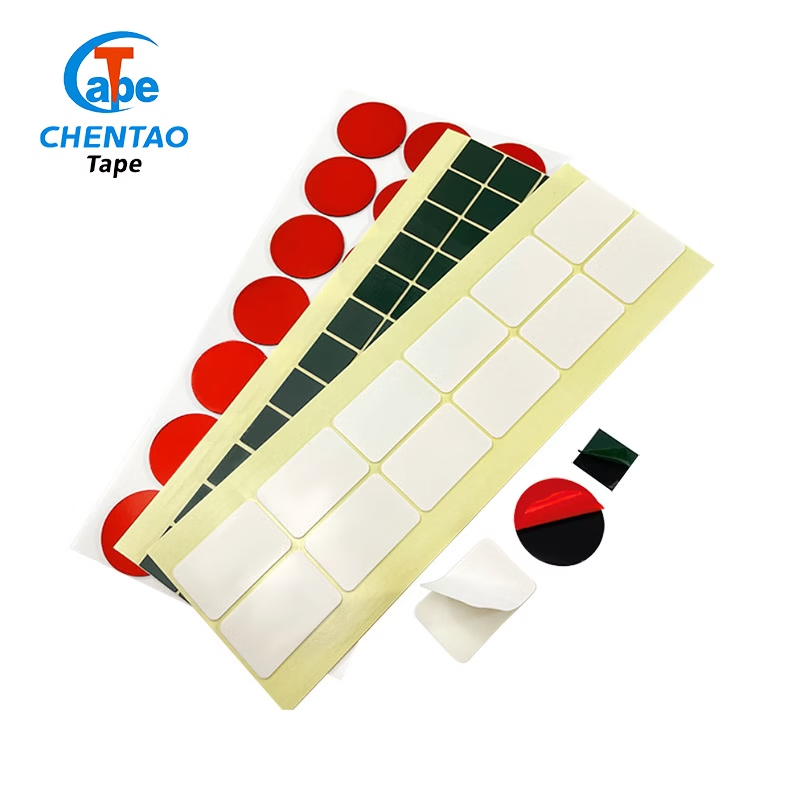
PTFE Film: Engineering Guide to Uses, Specs, and Selection
- Review PTFE film properties, applications and selection questions.
- Match the material form and dimensions to your process.
- Confirm performance using the chosen grade and test conditions.
On this page
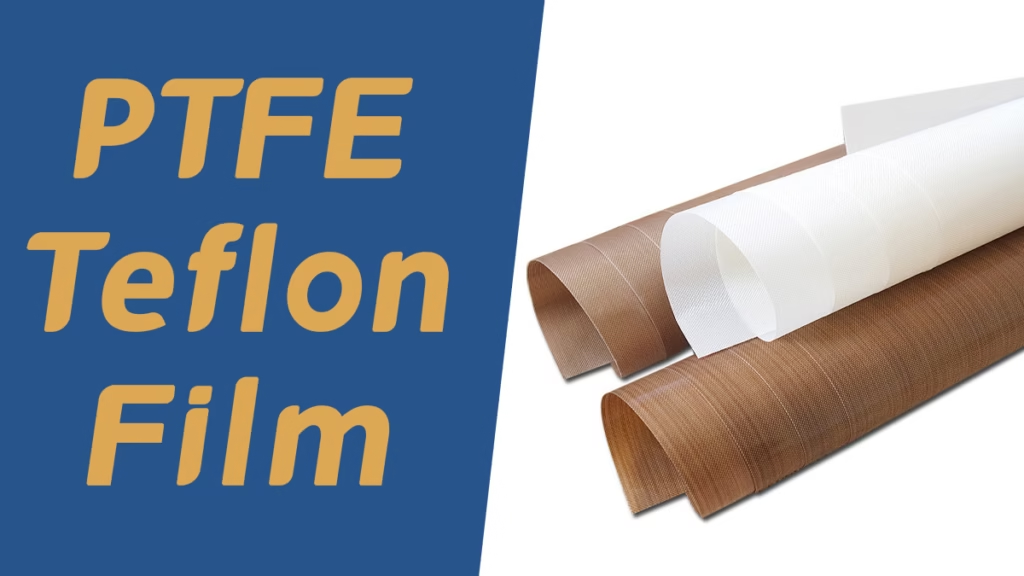
The High-Performance Material Overcoming Industry Pain Points
Industrial engineers consistently battle:
- Chemical degradation causes 32% of unplanned equipment downtime (Chemical Processing Industry Report 2023)
- Temperature limitations forcing costly process compromises
- Friction-induced wear consumes 14% of maintenance budgets
PTFE Teflon film delivers engineered solutions with:
✔ Unparalleled chemical resistance (0.01% weight change after 7 days in 98% H₂SO₄)
✔ Widest operational temperature range (-268°C to +315°C/-450°F to +600°F)
✔ Self-lubricating surface reducing friction by 83% vs. steel
Defining PTFE Teflon Film Performance Parameters
Material Science Breakdown
- Base Chemistry: (C₂F₄)ₙ polymer chains with fluorine shielding
- Manufacturing Variants:
- Skived (0.025-3mm thickness)
- Cast (superior surface finish)
- Filled (glass fiber, graphite, bronze additives)
Performance Benchmarking Table:
Scroll sideways to compare all columns.
| Characteristic | PTFE Film | Competing Polymers |
| Continuous Temp Range | -268°C to +315°C | -40°C to +150°C |
| Chemical Resistance | 9.8/10 | 5.2/10 |
| Dielectric Strength | 60 kV/mm | 20 kV/mm |
| Coefficient of Friction | 0.04 | 0.25-0.60 |
Engineered Solutions for Critical Applications
Chemical Processing Systems
- Lining for acid storage tanks (10+ year service life vs. 18 months for rubber)
- Case Study: BASF reduced reactor maintenance costs by €380,000 annually
- Gasket performance data: 0.0001% permeation rate @ 100°C
High-Reliability Electrical Insulation
- Aerospace wiring protection (MIL-I-23053/4 compliant)
- Transformer barrier films (40+ kV/mm breakdown strength)
- Expert Insight:
“PTFE’s stable dielectric properties make it indispensable in high-voltage applications”
– Dr. H. Watanabe, IEEE Fellow
Food & Pharmaceutical Manufacturing
- Non-stick conveyor belts (FDA 21 CFR 177.1550 compliant)
- Aseptic packaging interfaces (validated for ISO Class 5 cleanrooms)
- Process Validation Data: 500+ autoclave cycles with <0.1% dimensional change
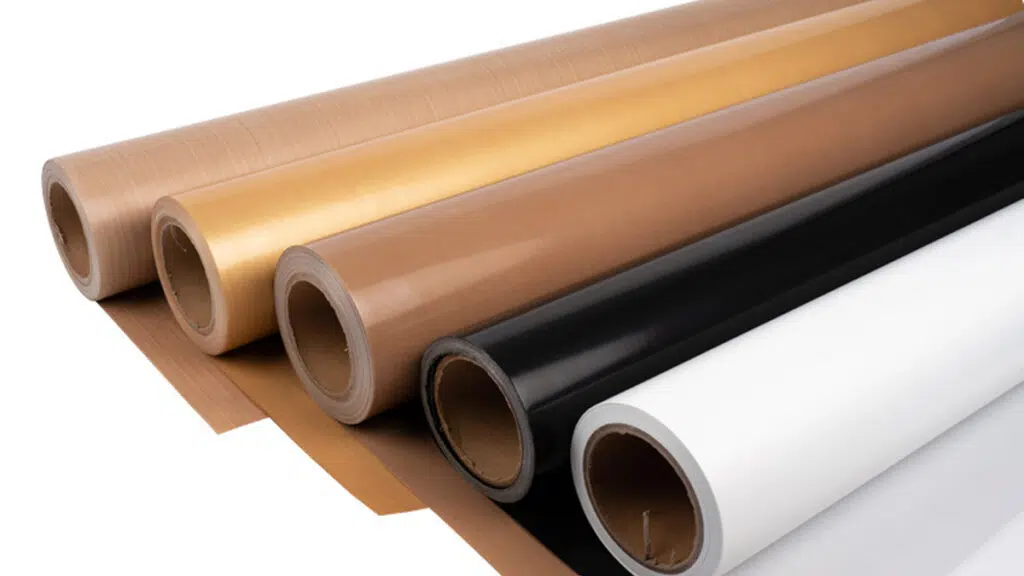
Technical Selection Matrix
- Chemical Exposure → Virgin vs. filled PTFE
- Load Requirements → Thickness (0.05mm to 6mm)
- Surface Finish Needs → Skived vs. cast films
- Regulatory Compliance → FDA/USP/UL listings
Installation Protocols
✔ Surface Preparation: SSPC-SP1 standard
✔ Fabrication Tolerance: ±0.005mm for precision applications
✔ Quality Verification: FTIR spectroscopy for material authentication
FAQ
How does PTFE film handle cryogenic conditions?
A: Maintains flexibility down to -268°C, making it ideal for LNG applications.
Can PTFE film be sterilized?
A: Yes – withstands 500+ cycles of gamma, ETO, and autoclave sterilization.
What’s the lead time for PTFE Teflon film sheet plate orders?
A: Standard grades ship in 3-5 days; custom formulations require 2-3 weeks.
Total Cost of Ownership Analysis
Scroll sideways to compare all columns.
| Cost Factor | Conventional Materials | PTFE Solution |
| Material Cost | $12/m² | $38/m² |
| Installation | $8/m² | $10/m² |
| Annual Maintenance | $25/m² | $2/m² |
| 5-Year TCO | $153/m² | $58/m² |
The Material Upgrade Your Operations Need
PTFE Teflon film provides:
✔ 62% lower lifetime costs than conventional materials
✔ Process reliability in extreme conditions
✔ Compliance assurance for regulated industries
Take Action Today:
📞 Speak with our materials engineers
📧 Request application-specific testing data
🆓 Schedule a plant audit for custom solutions
Find the right tape for your application
Tell us what you need to bond, your operating conditions and the size or quantity you have in mind. Our team can help with material selection, samples and a quotation.
Discuss my application