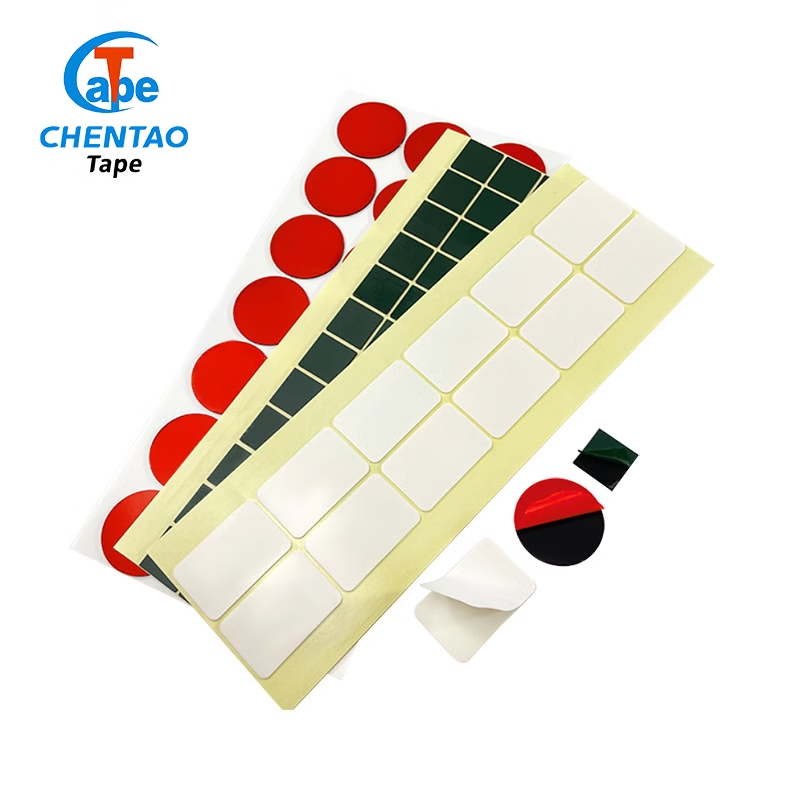
Double-Sided Acrylic Foam Tape: 5 Proven Industrial Uses
- Applications: trim, glazing, displays, nameplates and rail interiors.
- Selection: check materials, thickness, load and temperature.
- Before production: test samples on your actual surfaces.
On this page
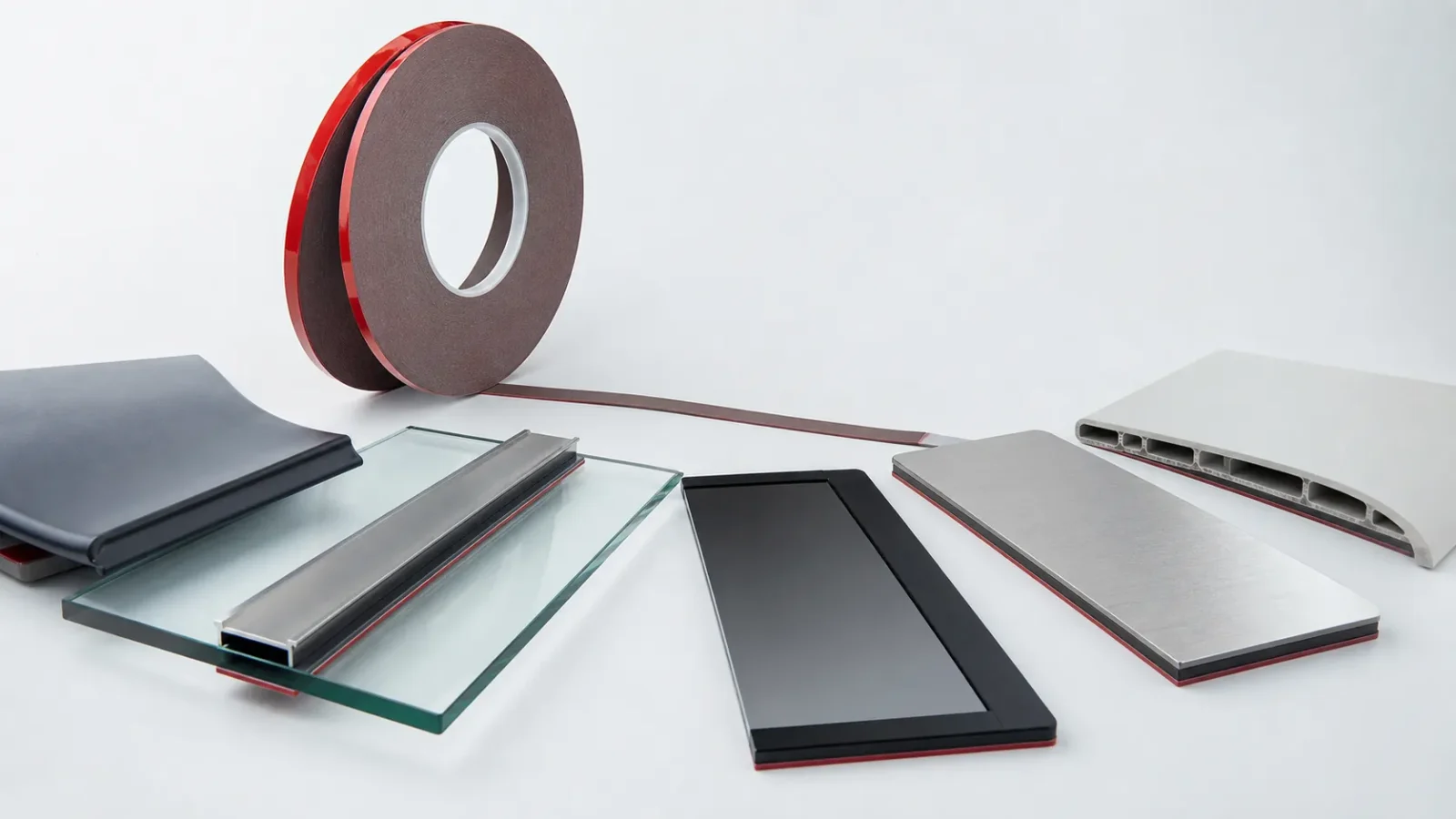
Double-sided acrylic foam tape bonds metals, glass, and plastic without drilling, riveting, or waiting for liquid adhesive to cure — covered alongside other formats in the double-sided tape comparison guide.
1. Five Proven Industrial Bonding Applications
1. Automotive Exterior Trim
Door trim, rear badges, and spoilers must survive 10,000+ hours of road operation, UV, and -40 C to 90 C swings. Mechanical clips require drilled holes that create stress risers and rattle as plastic fatigues.
Acrylic foam tape distributes load across the full bond area; the foam layer damps 10 to 50 Hz road vibration — the band that fatigue-cracks rigid joints. IATF 16949 thermal cycling confirms survival. 3M™ VHB 4952 / 5952 (40 to 60 N/25mm peel on painted aluminium) is the industry benchmark.
2. Architectural Glazing
Curtain-wall systems need a glass-to-aluminium bond lasting 30 to 50 years under daily thermal cycling, wind load, and sustained UV. Screws create water-ingress paths; structural silicone needs 14 to 28 days in-situ cure.
Acrylic foam tape provides a factory-applied alternative. Per ASTM G155 / QUV, peel strength on glass must remain ≥25 N/25mm after 1,000 hours UV — closed-cell acrylic foam grades with UV-stabilised PSA meet this. ETAG 002 covers permissible adhesive stress limits.
3. Consumer Electronics Displays
Display-bezel bonding in tablets, POS terminals, and kiosks needs no visible fasteners. Foam tape seals the 0.3 to 0.8 mm gap between display module and chassis using ultra-thin 0.2 to 0.5 mm grades.
Compressed foam provides IPX4-level splash protection without a separate gasket. Drop qualification per IEC 60068-2-27 at 10 g / 11 ms — the foam absorbs impulse energy versus a rigid adhesive.
4. Industrial Nameplates
Machine nameplates and safety labels must stay bonded for 10 to 20 years across IPA cleaning, oil mist, coolant splatter, and motor vibration. PSA is chemically resistant per ASTM D543; the foam core absorbs 50 Hz / 5 g factory-floor vibration per ISO 10816-1.
Critical step: wipe the surface with IPA before application — bond strength rises 30 to 50 percent on machined aluminium. No primer required on clean steel, aluminium, or painted mild steel.
5. Rail Interior Panels
Interior panels in trains, metros, and buses must pass fire-safety qualification. Acrylic foam grades with UL 94 V-0 foam cores can meet EN 45545-2 HL2/HL3 — fire rating must be confirmed by supplier test report for the specific foam-core formulation, not general product-line approval.
Replacing rivets with foam tape saves 15 to 20 percent panel weight. ASTM D1000 and UL 746B thermal aging support 20-year bonded service life.
Note: Foam tape selection is substrate-driven, not industry-driven. The same VHB-class tape specified for automotive trim also serves electronics displays and nameplates when substrate and temperature match. Confirm peel strength on your actual production substrate.
Quick selection rule:
- Below 120 C, structural load, gap fill needed → acrylic foam tape
- 150 to 260 C or below -60 C → silicone foam or PI-film tape
- Smooth surface, decorative mounting only → nano double-sided tape
- Paper lamination or temporary mounting → tissue double-sided tape
2. How Acrylic Foam Tape Works
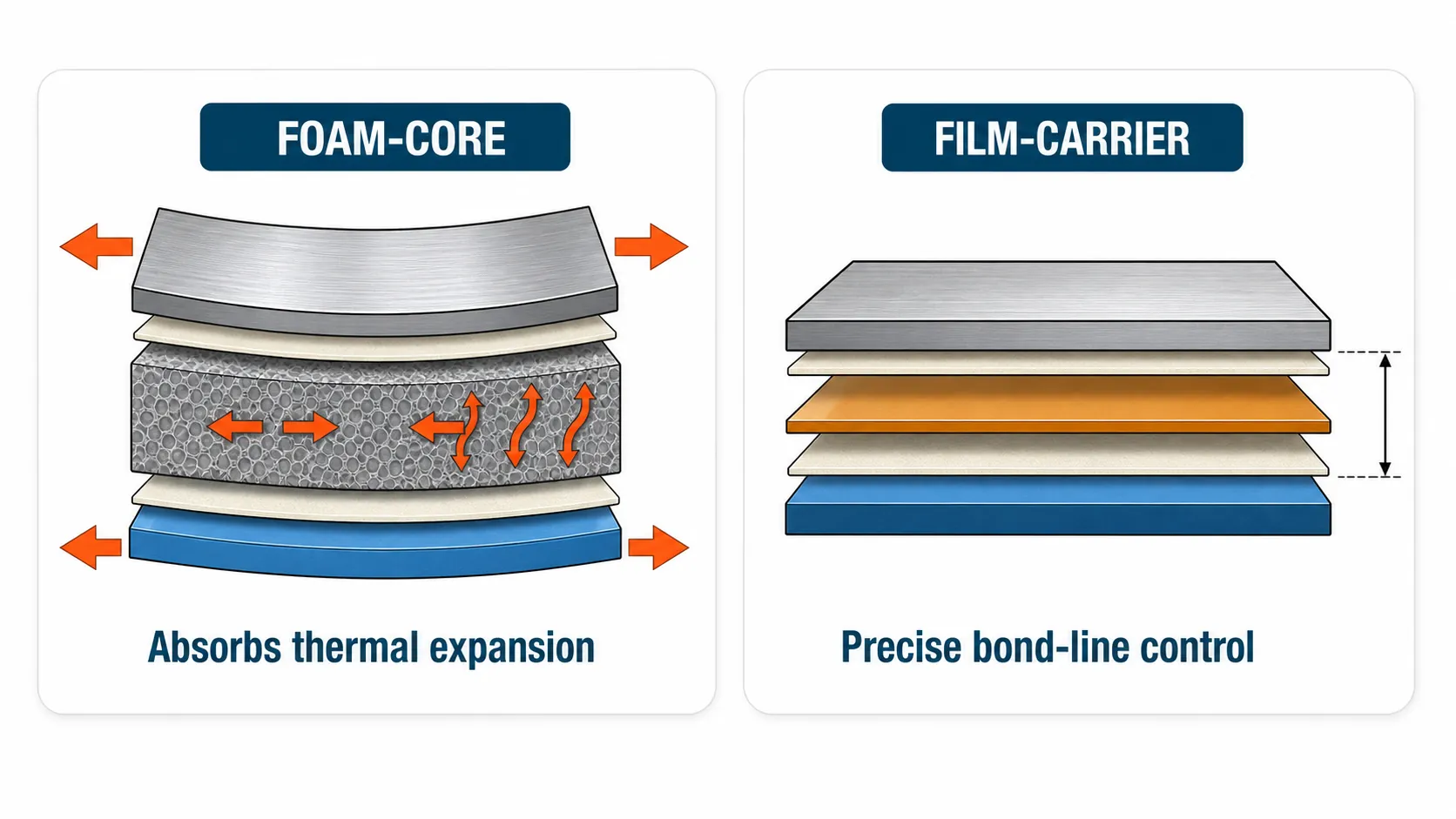
Three-layer construction: a closed-cell acrylic foam core with pressure-sensitive acrylic adhesive (PSA) on each face. Under clamp pressure the foam compresses 20 to 40 percent and conforms to surface waviness up to Ra 15 micrometres — eliminating air pockets that reduce bond area in rigid thin-film tape.
The acrylic PSA resists UV, isopropyl alcohol, weak acids, and engine oils (ASTM D1000 long-term immersion). The bond reaches full shear strength after 24 to 72 hours of cold-flow at room temperature — no heat, no UV cure, no two-part mixing.
Scroll sideways to compare all columns.
| Property | Typical value | Test method |
|---|---|---|
| Total thickness | 0.8 / 1.1 / 1.6 mm | ASTM D1000 |
| Peel strength (23 C, 180 deg) | 30 to 50 N/25mm | ASTM D3330 |
| Continuous service temp | -40 C to 120 C | UL 94 / ASTM D1002 |
| Short-term peak | 150 C, 30 min max | Supplier datasheet |
Key Takeaway: The foam core compensates for gaps up to 2 mm and damps 10 to 50 Hz vibration. The acrylic PSA bonds to most painted metals and glass without primer when the surface is clean and dry.
Scroll sideways to compare all columns.
| Format | Thickness | Gap fill | Vibration damping | Best fit |
|---|---|---|---|---|
| Tissue double-sided tape | 0.05 to 0.15 mm | None | None | Paper lamination, light mounting |
| Acrylic foam tape | 0.4 to 3.2 mm | Up to 2 mm | 10 to 50 Hz | Structural bonding on metals, glass |
| Silicone foam double-sided tape | 0.5 to 1.5 mm | Up to 1 mm | 5 to 40 Hz | High-temp zones 150 to 260 C |
| Nano double-sided tape | 1 to 3 mm | None | None | Smooth decorative mounting only |
Sourcing Acrylic Foam Tape for Industrial Production
Before first-article approval, three documents must be reviewed: the ISO 9001 production lot certificate (lot-specific), the RoHS 2 Declaration of Conformity, and the REACH SVHC Safety Data Sheet.
Standard roll widths range from 6 mm to 1,000 mm; custom die-cut formats are produced in-house to 0.1 mm tolerance.
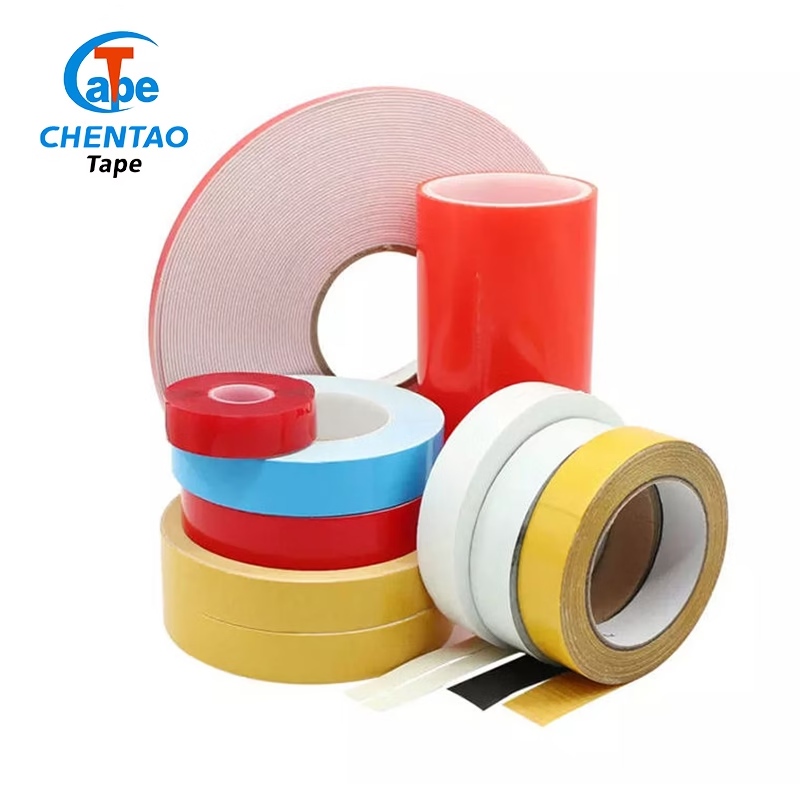
For automotive OEM or rail qualification, request a first-article inspection report or PPAP-equivalent data package. Contact us at ChenTao Tape or browse the double-sided acrylic foam tape product page. Samples dispatch within 24 hours.
FAQ
What temperature range does double-sided acrylic foam tape handle?
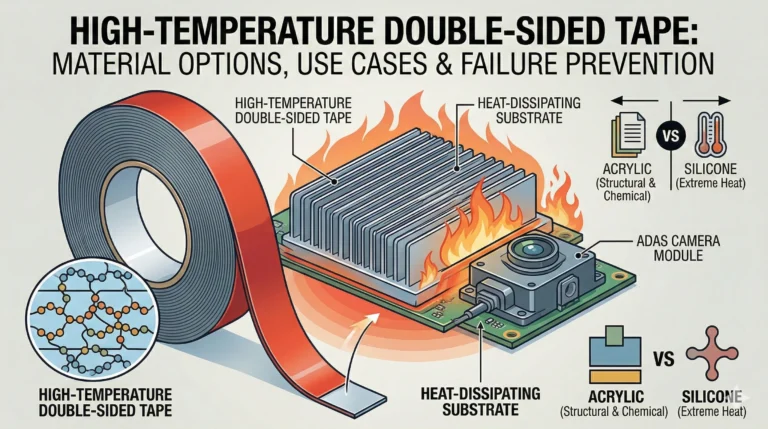
Continuous service: -40 C to 120 C. Short-term peak: 150 C for 30 minutes or less. Above 150 C, acrylic PSA softens and bond strength drops below 30 percent of rated room-temperature value.
Scroll sideways to compare all columns.
| Exposure | Acrylic foam tape | Silicone foam tape | PI-film tape |
|---|---|---|---|
| Continuous service | -40 C to 120 C | -60 C to 200 C | -40 C to 260 C |
| Short-term peak | 150 C, 30 min max | 260 C, 30 min max | 300 C, 30 min max |
| Reflow oven (230 to 260 C) | Not rated | Limited | Yes |
Plain-language check: 120 C continuous service means the tape survives a car interior in summer (typically 80 to 90 C), but it is not rated for reflow ovens (230 to 260 C peak) or powder-coat ovens (180 to 200 C cure).
How does acrylic foam tape compare to 3M™ VHB tape?
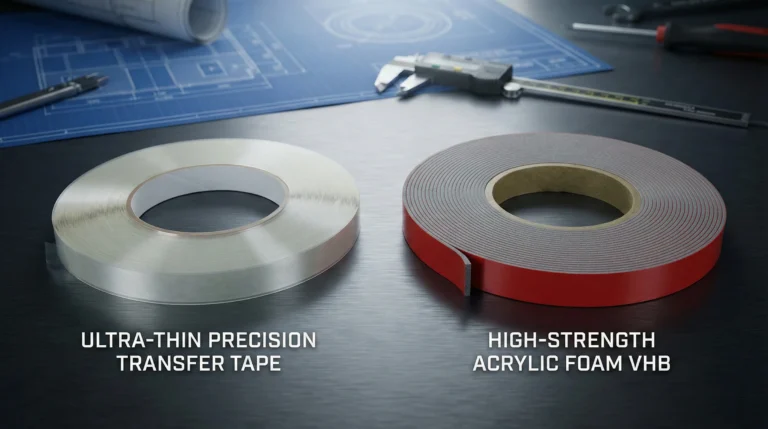
3M™ VHB (Very High Bond) is the category-defining product, with foam core thicknesses from 0.4 mm to 3.2 mm and different adhesive formulations for high- and low-surface-energy substrates. ChenTao acrylic foam tape matches VHB 4956 / 5952 peel and shear performance and offers lower unit cost for high-volume runs. Key selection criteria: substrate compatibility on the actual production substrate, thickness and foam density, and per-lot compliance documentation.
Find the right tape for your application
Tell us what you need to bond, your operating conditions and the size or quantity you have in mind. Our team can help with material selection, samples and a quotation.
Discuss my application