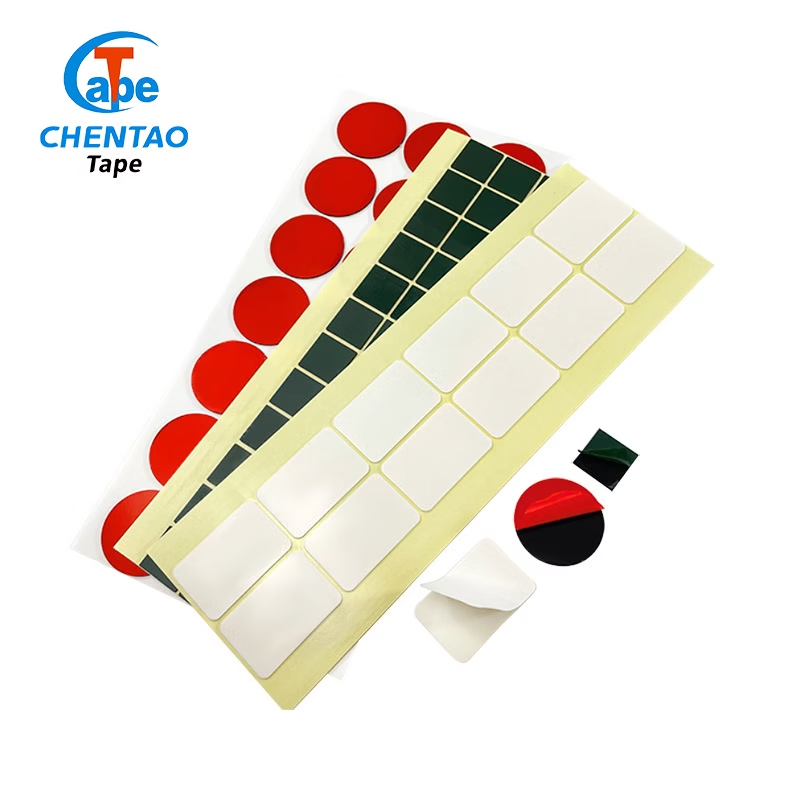
Nano Tape Mounting Specifications: Ra, Load, and Selection
Engineering guide to nano tape mounting specifications: load by Ra, 100+ cycles on glass, ISO 29862 compliant grades. Request sample or datasheet.
On this page
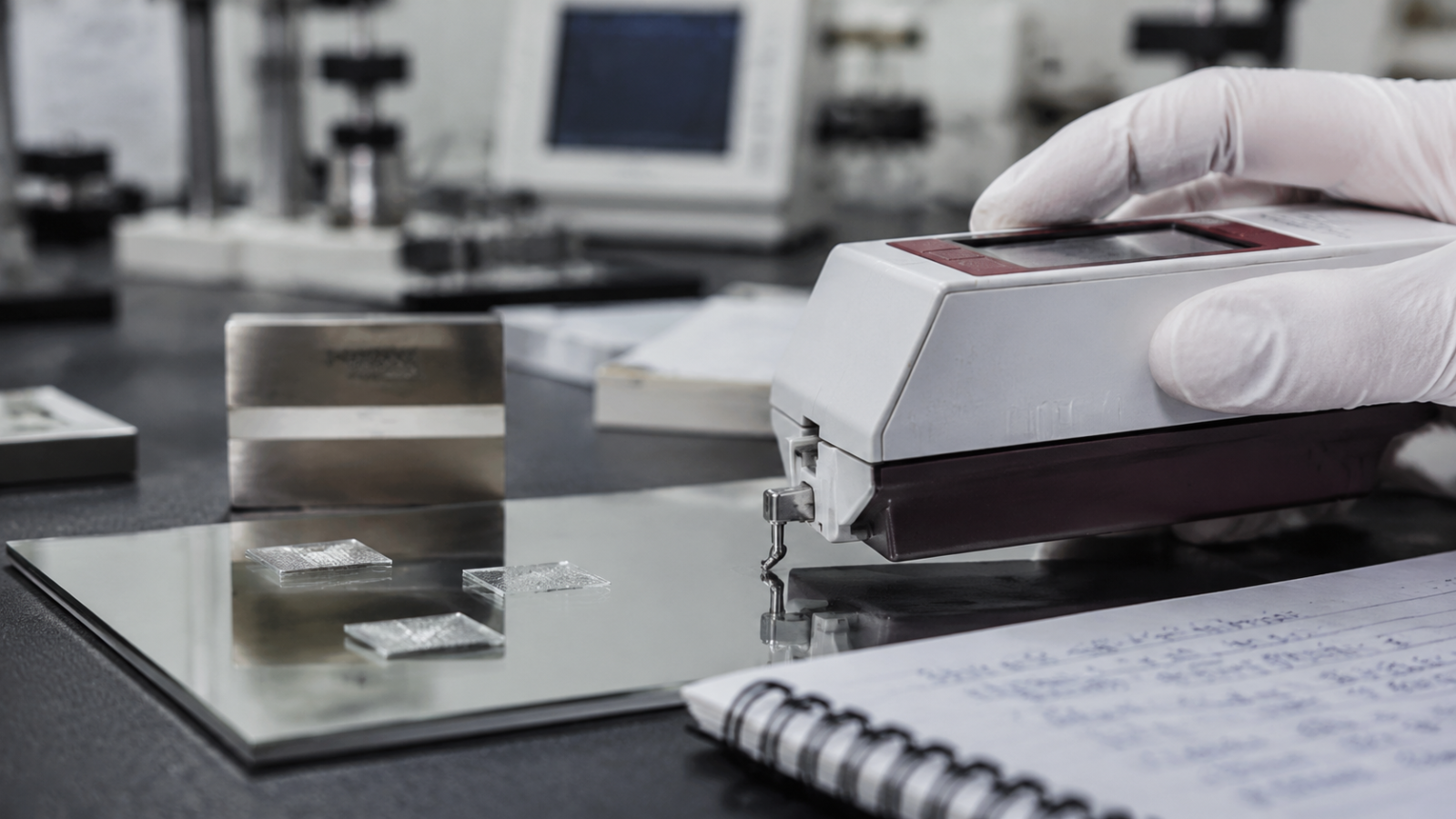
Engineers and product designers specifying nano tape mounting specifications need three data points before committing a design: how much load the bond will carry, what surface roughness Ra the substrate presents, and how many reuse cycles the application demands. This guide covers the physics of dry adhesion arrays, pull-off strength data by substrate class (Ra 0.05–8.0 μm), temperature and humidity limits, reuse cycle benchmarks, comparative performance versus 3M™ Command Strips, Tesa® Powerstrips, and acrylic foam tape for loads above 5 kg, and a grade selection table for industrial fixture mounting, specimen display, and R&D laboratory applications.
1. Dry Adhesion Mechanism and Engineering Fundamentals
1.1 Micro-Pillar Array Physics
Nano tape uses micro-structured silicone pillar arrays — pillar pitch 20–50 μm, aspect ratio 2:1 to 5:1 — that maximise real contact area on smooth substrates. Pull-off force is governed by contact area multiplied by van der Waals surface energy (~30–50 mJ/m²), which makes surface roughness the dominant performance variable before any other specification is considered.
The primary performance metric is pull-off strength per unit area (N/cm²): this governs vertical wall mounting, where gravity acts perpendicular to the bonded face. Shear strength — resistance to sliding parallel to the surface — typically runs 2–4× pull-off strength on glass substrates.
Zero chemical crosslinking is involved. The bond forms and breaks by mechanical deformation of the pillar array, which is why repeated removal leaves no adhesive residue on the substrate. This differentiates nano tape from pressure-sensitive adhesive (PSA) tape, where the bond forms via viscoelastic flow and surface anchoring — a process that is at least partially irreversible.
1.2 Substrate Energy and Surface Readiness
High-surface-energy (HSE) substrates — glass, ceramic, polished stainless steel — have water contact angles below 40° and deliver full van der Waals potential, meaning bond strength at the rated pull-off value is achievable. Low-surface-energy (LSE) substrates — PP, PE, PTFE, silicone-coated panels — have contact angles above 70° and produce a 50–80% bond strength reduction. Nano tape is not rated for LSE surfaces without surface treatment.
Field test in 10 seconds: place a 0.1 mL water droplet on the substrate. If the contact angle exceeds 60°, the surface is LSE and nano tape should not be applied without engineering approval.
Contamination sensitivity is significant: a 1 μm oil film reduces pull-off strength 40–60%. Solvent wipe with isopropyl alcohol (99% IPA on electronics-grade surfaces, or 70% IPA / 30% deionised water for more aggressive degrease) is mandatory before bonding in any industrial application.
1.3 Core Specification Parameters at a Glance
Scroll sideways to compare all columns.
| Parameter | Test Method | Typical Value (glass Ra 0.05 μm) |
|---|---|---|
| Pull-off strength | ASTM D3330 / PSTC-101 | 1.0–2.5 N/cm² |
| Shear resistance | ASTM D3654 | 3.0–7.0 N/cm² |
| 90° peel adhesion | ISO 29862:2018 | 8–20 N/25 mm |
| Continuous temperature | Rated range | −20°C to +80°C |
| Reuse cycles (glass) | Internal QC | 100–200 cycles to 70% retention |
Baseline substrate: float glass Ra 0.05 μm, cleaned per ASTM D6422, 23°C/50% RH.
2. Surface Roughness (Ra) Compatibility Matrix
2.1 Ra Classification and Nano Tape Behaviour
Surface roughness is the first qualifier in any nano tape mounting specifications review. The Ra threshold governs whether the pillar array can seat across enough of the substrate surface to reach rated pull-off:
- Ra < 0.8 μm (mirror-finish glass, glazed ceramics, polished stainless, anodised aluminium): maximum contact fraction achieved; rated pull-off strength achievable; this is the design baseline for full-specification applications
- Ra 0.8–1.6 μm (brushed aluminium, lightly sanded epoxy paint, standard ABS injection-moulded): contact fraction reduced 30–50%; apply a 25% safety margin on top of the published load rating
- Ra 1.6–3.2 μm (drilled/tapped metal panels, bead-blasted surfaces, rough lacquer): contact fraction below 40%; load rating effectively halved; engineering review required before specifying
- Ra > 3.2 μm (cast iron, rough concrete, heavily textured powder coat): nano tape is NOT rated; use PSA foam tape or a mechanical fastener
Substrate check in 10 s: rub a clean fingertip across the surface — smooth as glass means Ra < 0.8 μm; noticeable drag usually means Ra > 1.5 μm. Use a portable profilometer (Mitutoyo SJ-210 class) for production-grade specification work.
2.2 Substrate-by-Substrate Load Data Table
Scroll sideways to compare all columns.
| Substrate | Typical Ra (μm) | Compatibility | Max Load (kg / 100 cm²) |
|---|---|---|---|
| Float glass | 0.05 | ✅ Full spec | 5.0 |
| Glazed ceramic tile | 0.10–0.20 | ✅ Full spec | 4.5 |
| Polished stainless 2B finish | 0.10–0.40 | ✅ Full spec | 4.8 |
| Anodised aluminium 6061-T6 | 0.30–0.80 | ✅ Full spec | 4.5 |
| Brushed stainless 4B finish | 0.50–1.50 | ⚠️ Reduced | 2.5–3.5 |
| Epoxy-painted mild steel | 1.00–2.00 | ⚠️ Evaluate | 2.0–3.0 |
| OEM automotive paint (soft-touch) | 1.00–2.50 | ⚠️ Evaluate | 1.5–2.5 |
| Standard plasterboard paint | 1.50–3.00 | ⚠️ Reduced | 1.0–2.0 |
| Bead-blasted aluminium | 2.00–4.00 | ❌ Not rated | < 1.0 |
| Raw concrete | 5.0–15 | ❌ Not rated | N/A |
Values based on 3.3× safety factor on rated pull-off; static vertical load; 24 h dwell at 23°C/50% RH.
2.3 Automotive Soft-Touch and Special Coatings
2020+ vehicle interior panels often use micro-textured polyurethane or ABS soft-touch coatings with Ra measured at 1.5–3.5 μm depending on the finish. This puts them at the marginal-to-below-spec range for nano tape, and performance on these surfaces is not predictable without sample testing.
Dashboard test protocol: apply a 2×2 cm piece at rated load for 24 hours at cabin temperature, then pull at 90°. If measured force is below 2 N/cm², the substrate is not reliable for this application and a PSA alternative should be specified.
3. Load Capacity Ratings and Safety Factor Guidelines
3.1 Pull-Off Strength and Area Scaling
Pull-off strength is central to all nano tape mounting specifications and governs the maximum normal (perpendicular) force the bond can sustain — the critical load for vertical wall-mounting of panels and displays.
Pull-off scales linearly with bonded area: doubling the contact area doubles load capacity. Two safety factor tiers apply:
- Permanent installations: working load ≤ 30% of published pull-off (3.3× SF)
- Temporary or display applications: working load ≤ 50% of published pull-off (2.0× SF)
Load rule of thumb: double the bonded area, not the tape grade. A 4×10 cm bond on the same substrate beats a 2×10 cm “heavy-duty” grade every time.
3.2 Design Load Table by Bonded Area
Scroll sideways to compare all columns.
| Bonded Area | Glass Ra < 0.8 μm | Brushed Al Ra 1.5 μm | Epoxy Paint Ra 2.0 μm |
|---|---|---|---|
| 5×5 cm | 3.1 kg | 1.5 kg | 1.0 kg |
| 10×10 cm | 12.5 kg | 6.0 kg | 4.0 kg |
| 15×15 cm | 28 kg | 14 kg | 9 kg |
| 5×20 cm strip | 12.5 kg | 6.0 kg | 4.0 kg |
All values at 3.3× safety factor (30% of rated pull-off). Do not use for structural load-bearing applications without independent engineering sign-off.
3.3 Dynamic and Vibration Loading
Nano tape is NOT rated for dynamic, cyclic, or vibration loads. Repeated oscillating stress fatigues the micro-pillar geometry by progressively collapsing the columns at the base. Applications involving machine panels, transport fixtures, or vehicle interiors should use nano tape for alignment or damping purposes only — the structural load must be carried by a mechanical fastener.
No dedicated ISO or ASTM standard for microstructured dry adhesive arrays under dynamic loading exists as of 2026.
4. Temperature Range and Environmental Limits
4.1 Continuous Service Temperature
Rated service range is −20°C to +80°C continuous, reflecting the silicone micro-pillar substrate’s thermal stability window. Short-term excursions up to +120°C for no more than 30 minutes are tolerated; above +130°C the pillar structure begins to irreversibly flow, producing a permanent adhesion loss.
At the low end, some grades are rated to −40°C; the silicone remains flexible, but bonded substrates — particularly glass and glazed ceramics — may partially delaminate at thermal contraction rates. Evaluate on the project substrate before committing.
Automotive cabin worst-case conditions reach 85°C in direct sun (reference ISO 105-B02 equivalent), placing nano tape at its thermal limit. For surfaces that may exceed 80°C, specify a polyimide-based high-temperature mounting system rated above 150°C.
Temperature check: if the bonding surface exceeds 60°C in operation, evaluate thermal cycling on the actual substrate before deployment — or switch to a high-temperature adhesive system.
4.2 Humidity and Condensation Resistance
Silicone micro-pillars are inherently hydrophobic: water droplets bead off without penetrating the array geometry. Submerged or continuous condensation service is NOT rated; water film between pillar tips and substrate reduces van der Waals interaction force measurably.
Humidity cycling (40 → 90% RH) has been validated to 500 cycles on glass in standard QC protocol. Painted plasterboard at 90% RH may swell and change Ra — re-evaluate the bond after the first high-humidity season if the installation is on an interior wall near a wet room.
Outdoor exposure: the silicone substrate is UV-stable, and standard PSA alternatives yellow and embrittle faster under UV exposure. Nano tape remains functional outdoors but should be retested at the 12-month mark for any load-bearing application.
4.3 Chemical Resistance Limits
Scroll sideways to compare all columns.
| Chemical class | Compatibility |
|---|---|
| IPA, ethanol, dilute detergents, water | ✅ Resistant |
| Strong acids (pH < 3), strong bases (pH > 11) | ❌ Not resistant |
| Ketone solvents (MEK, acetone) | ❌ Not resistant — swell silicone crosslinks |
| Aromatic hydrocarbons (toluene, xylene) | ❌ Not resistant |
Acetone exposure for 10 minutes causes 15–25% volume swell in silicone pillars, destroying array geometry irreversibly. For clean-room applications, standard grades produce no outgassing above the IEST-STD-CC1246E threshold on the silicone substrate; verify the specific grade against the environment’s ISO class requirements before design freeze.
5. Reuse Cycles and Surface Maintenance
5.1 Cycle Life Data by Substrate
Scroll sideways to compare all columns.
| Substrate | Typical Ra (μm) | Cycles to 70% Retention |
|---|---|---|
| Float glass | 0.05 | 100–200 |
| Glazed ceramic tile | 0.10–0.20 | 80–150 |
| Anodised aluminium | 0.30–0.80 | 50–120 |
| Epoxy-painted steel | 1.00–2.00 | 30–60 |
| Plasterboard paint | 1.50–3.00 | 20–40 |
| Automotive soft-touch | 1.00–2.50 | 10–30 |
Cycle = one application plus one removal. End-of-life criterion = pull-off force below 50% of initial, or visible pillar collapse at 10× magnification.
5.2 Washing and Reactivation Protocol
Contaminant accumulation — dust, skin oil, metallic particles — reduces bond performance after 10–20 cycles without cleaning. Recovery procedure:
- Wash the active face with lukewarm water and mild dish soap; use gentle circular motion with a fingertip
- Avoid metal brushes or abrasive pad of any kind — column damage from abrasion is irreversible
- Rinse thoroughly; pat dry; air dry 30–60 minutes at room temperature before returning to service
- Do NOT use compressed air — jet pressure can collapse silicone columns
Post-wash strength recovery is typically 90–95% of pre-contamination level within 2 bonding cycles.
When to retire: pull-off force drops to below 50% of initial after washing, OR columns are visibly collapsed at 10× loupe. Median service life on glass: 100–200 wash cycles to 70% pull-off retention (matches the §5.1 cycle table).
5.3 Storage and Shelf Life
Store rolls with the protective liner attached, away from dust and oily vapours. Conditions: 5–30°C, 20–60% RH, out of direct sunlight. Shelf life with liner intact: 24 months from production date. Stack limit is 5 rolls maximum to prevent column compression under weight.
6. Engineering Application Scenarios
6.1 Industrial Fixture and Specimen Mounting
PCB panel display in a clean room benefits from nano tape’s residue-free hold during short-duration fixture alignment before final mechanical fastener installation — the bonded area and substrate Ra determine pull force in advance, removing guesswork from the fixture design.
Optical specimen mounting on glass stages is an especially strong application: the residue-free removal essential for interferometry and surface profilometry replaces double-sided PSA tape that leaves optical adhesive traces after removal.
For tooling alignment in CNC secondary operations, nano tape provides temporary fixture for small components on polished fixture plates (well inside the < 0.8 μm full-specification window defined in §2.1).
6.2 Product Design and Prototype Applications
Surface attachment for test and photography allows panels, tiles, or decorative surfaces to be mounted in 3D mock-ups without drilling — enabling multiple reconfiguration cycles in a single session. Sensor and probe temporary hold gives non-permanent attachment for environmental sensors, vibration accelerometers, and thermocouple probes during development testing; residue-free removal does not contaminate the sensor-to-surface interface.
Trade show and exhibition display mounting on float glass partition walls, aluminium composite panels, and marble lobby surfaces withstands setup and teardown with no substrate damage. Typically 10–50 service cycles across a 3-year exhibition programme, with an IPA wipe between events.
6.3 R&D and Laboratory Use
Weight calibration block temporary hold replaces putty or clay for horizontal-surface holds in gravimetry set-ups. Sample card display in test arrays holds card specimens to board for parallel comparison without deformation from pins, staples, or clamps. Electrical isolation note: the silicone substrate provides dielectric isolation between bonded surfaces — verify the dielectric strength rating of the specific grade before use in live-circuit testing environments.
7. Comparative Selection vs Alternative Mounting Systems
7.1 Nano Tape vs 3M™ Command Strips
3M™ Command Strips use an acrylic PSA on a foam carrier with a stretch-release removal tab. On lightly textured painted drywall — Ra 1–2 μm — Command Strips outperform nano tape because the compliant foam bridges surface variation that the micro-pillar array cannot seat across. The rated load on smooth painted wall is 450 g–5 kg per strip under manufacturer lab conditions.
Reuse model: single-use. The stretch-release destroys strip geometry; a replacement strip is required after every removal cycle, making cumulative cost higher than nano tape after 5–10 cycles. On Ra ≤ 0.8 μm substrates — glass, glazed tile, polished metal — nano tape carries equivalent or higher load per unit area and is fully reusable. Temperature rating for Command Strips is 70°C; above that, PSA creep risk increases.
Selection guidance: Command Strips suit permanent or semi-permanent installs in consumer environments where surface prep (IPA wipe) is impractical; nano tape suits engineering environments with controlled surfaces and repetitive access requirements.
7.2 Nano Tape vs Tesa® Powerstrips
Tesa® Powerstrips are foam-carrier tape with a repositionable PSA and stretch-release mechanism — similar architecture to Command Strips but engineered for heavier European wall constructions. Rated load: up to 2 kg per strip on painted plaster; 5 kg on tile or glass with double application. Continuous service temperature cap is 50°C, lower than nano tape’s 80°C ceiling.
Tesa Powerstrips have a marginal advantage on higher-Ra plasterboard paint (Ra 1.5–3.0 μm) where nano tape load rating falls below 2 kg. On Ra ≤ 0.8 μm substrates in bathroom, kitchen, or laboratory environments, nano tape carries higher load per cm² and lower cost per mount over the service life, because each stretch-release consumes the Powerstrip.
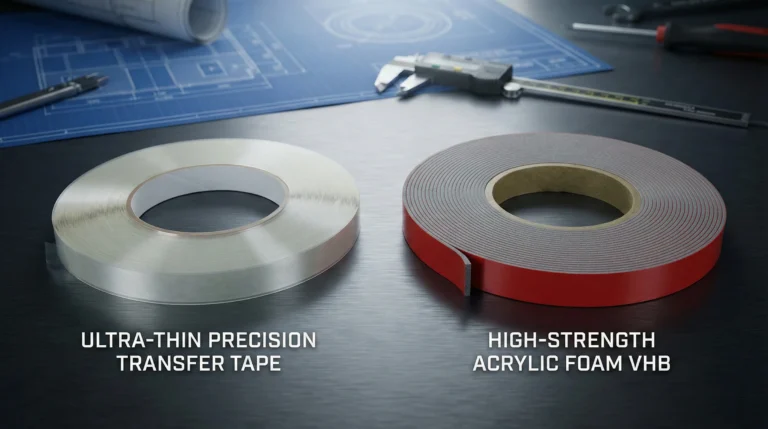
7.3 Nano Tape vs Acrylic Foam Tape (VHB™, Tesa ACXplus)
3M™ VHB and equivalent Tesa ACXplus acrylic foam tapes use a viscoelastic PSA on a closed-cell foam carrier. Rated load is 20–50+ kg per 25 cm² on metal-to-metal bonding (3M™ VHB 4959 specification). Temperature range is −40°C to +150°C continuous — exceeding nano tape’s ceiling by 70°C. Removal requires mechanical force or solvent and typically damages the substrate surface; adhesive residue requires solvent cleaning.
Select acrylic foam for: structural load above 10 kg, substrate Ra above 1.5 μm, operating temperature above 80°C, or permanent outdoor installation requiring UV and weathering resistance. See the double-sided tape category overview for full acrylic foam alternatives.
Select nano tape for: repetitive removal and reuse required, zero residue specification, Ra below 0.8 μm substrates, load below 5 kg per 100 cm², and clean-room or precision optical environments.
7.4 Selection Decision Tree
- Load > 10 kg → acrylic foam tape or mechanical fastener
- Load 2–10 kg, smooth substrate (Ra < 0.8 μm), repetitive cycles → nano tape
- Load 2–10 kg, rough substrate (Ra 0.8–3.0 μm), infrequent removal → 3M™ Command / Tesa® Powerstrips
- Load < 2 kg, consumer convenience (no surface prep) → 3M™ Command Strips
- Temperature > 80°C → acrylic foam tape (bonding) or polyimide tape (masking/gasketing)
8. Testing Standards and Qualification Methods
8.1 Applicable Standards
- ASTM D3330 (Standard Test Method for Peel Adhesion of Pressure-Sensitive Tape): applicable to nano tape peel measurement at 90° and 180° on stainless steel substrate (astm.org)
- ISO 29862:2018 (Self-adhesive tapes — Measurement of peel adhesion): the parallel EU/ISO standard; required for CE-marked product documentation and European supply chains (iso.org)
- PSTC-101 (Pressure Sensitive Tape Council — Peel Adhesion): test method for peel adhesion on rigid substrates, required for PSTC conformance claims (pstc.org)
- No dedicated ISO or ASTM standard exists for microstructured dry adhesive arrays as of 2026; pull-off strength is reported against ASTM D3330 / ISO 29862 using adapted substrate fixtures
8.2 Supplier Datasheet Requirements
A compliant engineering datasheet for nano tape must include: pull-off strength (N/cm² on glass Ra 0.05 μm), shear strength (N/cm²), service temperature range (°C continuous), cycle life (number of cycles to 70% retention on glass), substrate Ra compatibility range (μm), and chemical resistance profile.
Red flags that indicate incomplete data: “up to X kg” without specifying bonded area and substrate Ra; missing test method citation; no cycle life data; load reported in lbs without metric conversion; “typical” values with no min/max band.
8.3 In-House Qualification Protocol (4 Steps)
- Surface energy check: water contact angle on the production substrate — accept if below 40°
- Ra measurement: portable profilometer or optical comparator on a production substrate sample
- Pull-off strength test at the operating temperature with a calibrated digital pull gauge (N/cm²); compare to supplier datasheet within ±15% tolerance
- Cycle life acceptance test: 50 cycles at rated load; measure strength at cycles 1, 10, 25, and 50; accept if retention is ≥ 80% at cycle 50
9. Grade Selection and Product Variants
9.1 Grade Selection Criteria Table
Scroll sideways to compare all columns.
| Parameter | Light Duty (LD) | Standard (SD) | Heavy Duty (HD) |
|---|---|---|---|
| Rated load (100 cm² glass) | ≤ 2.0 kg | ≤ 5.0 kg | ≤ 10 kg |
| Ra compatibility limit | < 0.4 μm | < 0.8 μm | < 0.8 μm |
| Cycle life (glass) | 200+ cycles | 100+ cycles | 80+ cycles |
| Pillar height / thickness | 0.5–0.8 mm | 1.0–1.5 mm | 2.0–2.5 mm |
| Typical application | Specimen cards, sensor holds | Display, fixture alignment | Heavy panels, tool alignment |
| Grade designation | NT-10-0.8-L | NT-20-1.5-S | NT-50-2.5-H |
9.2 Format and Width Options
Standard slit rolls are available in 10 mm, 20 mm, 30 mm, and 50 mm width at 5 m per roll. Sheet format (100×150 mm, 10 sheets per pack) is available for prototype and R&D evaluation. Custom widths range from 5 to 300 mm; custom lengths to 50 m per roll; MOQ is 1,000 linear metres per width. Die-cut service covers complex shapes including L-frames, circles, and panel perimeter strips — custom tooling is required for volumes above 10,000 pieces.
See the nano double-sided tape product category for standard roll and sheet formats available for immediate dispatch.
9.3 Procurement Checklist for Engineers
When sourcing nano tape for industrial or product-design applications:
- Specify: substrate material + Ra value + bonded area dimensions + load (kg) + temperature range + cycle count target
- Request: datasheet PDF covering pull-off N/cm², shear N/cm², cycle life, and Ra compatibility range
- Request: sample kit (3 grades × 10×10 cm sheets) for in-house qualification per the 4-step protocol above
- Confirm: RoHS and REACH compliance certificate for EU-market products
- Confirm: MOQ, lead time, and custom width availability for production volumes above 5,000 m/year
Contact us to request a quote or sample — our team responds within one business day with a matched-grade recommendation for your substrate and load case.
10. Frequently Asked Questions
Q: What minimum surface roughness Ra is required for nano tape to reach its rated load capacity?
Rated pull-off strength is achievable on substrates where Ra ≤ 0.8 μm — this covers float glass (Ra 0.02–0.10 μm), glazed tile (0.05–0.30 μm), polished stainless 2B/BA finish (0.10–0.50 μm), and smooth anodised aluminium (0.30–0.80 μm). Above Ra 0.8 μm, contact fraction drops and load ratings must be derated: apply a 25% safety margin at Ra 0.8–1.6 μm, expect 50–70% reduction at Ra 1.6–3.2 μm, and the tape is not rated above Ra 3.2 μm regardless of grade.
Q: Can nano tape be used outdoors or on automotive exterior panels exposed to weather?
Outdoor use is possible on glass and polished stainless substrates because the silicone array is UV-stable and hydrophobic. Continuous rain exposure or submersion is not rated — standing water between the pillar tips and substrate reduces van der Waals interaction force. Automotive exterior panels with textured clearcoat typically run Ra 1.5–3.0 μm, placing them outside the full-specification window. For exterior panel bonding or under-bonnet sensor mounting where operating temperature exceeds 80°C, a chemical-bond PSA foam or acrylic foam tape is the correct specification.
Q: How many reuse cycles can nano tape sustain on glass before pull-off strength drops below specification?
On float glass (Ra ≈ 0.05 μm) with routine wash cycles, standard-grade tape retains above 70% of initial pull-off strength through 100–200 application-removal cycles. Heavy Duty grade on the same substrate reaches 80+ cycles before the same threshold. Cycle life falls sharply on rougher substrates: 20–40 cycles on plasterboard paint (Ra 1.5–3.0 μm), and 10–30 cycles on automotive soft-touch coatings (Ra 1.0–2.5 μm). Mechanical abrasion during peeling — not chemical degradation — is the primary failure mode; washing recovers 90–95% of strength if columns remain geometrically intact.
Q: What is the performance difference between nano tape and conventional double-sided PSA tape for precision instrument mounting?
The critical difference is residue behaviour on removal. Double-sided PSA tape leaves a transfer adhesive film on both surfaces after removal — a few-micron-thick layer that contaminates optical surfaces, interferes with sensor-to-substrate thermal contact, and requires solvent cleaning that may itself damage the surface or instrument housing. Nano tape leaves zero residue because bonding is physical (van der Waals) not chemical. The trade-off is substrate selectivity: PSA tape bonds to any surface energy class; nano tape requires Ra ≤ 0.8 μm and high-surface-energy substrates. For optical stages, profilometer specimen mounts, and gravimetry fixtures where both surfaces must remain analytically clean, nano tape is the correct choice provided the substrate qualifies.
Q: Under which ASTM or ISO standard should nano tape pull-off strength be tested for engineering specification documents?
Pull-off strength on a rigid substrate is measured per ASTM D3330 (180° or 90° peel adhesion) or ISO 29862:2018 for CE-marked products — both use float glass or stainless steel reference substrates. PSTC-101 covers the same test method and is required for conformance claims to PSTC tape standards. No ISO or ASTM standard specifically addresses microstructured dry-adhesive arrays as of 2026, so pull-off reports cite ASTM D3330 / ISO 29862 with a notation that the substrate is flat glass Ra 0.05 μm rather than the specified stainless steel reference panel.
Q: What industrial nano tape grades, datasheets, and minimum order quantities are available for engineering procurement?
Three standard grades (NT-10-0.8-L, NT-20-1.5-S, NT-50-2.5-H) cover the Light, Standard, and Heavy Duty load ranges; datasheets with per-lot pull-off, shear, and thermal cycling data are issued within one business day of request. Custom widths (5–300 mm) are available at MOQ 1,000 linear metres per width; sample kits (3 grades × 10×10 cm sheets) ship within 24 hours for in-house qualification. Contact us to request a quote or datasheet — share your substrate material, Ra value, load requirement, and operating temperature range for a matched-grade recommendation.
Find the right tape for your application
Tell us what you need to bond, your operating conditions and the size or quantity you have in mind. Our team can help with material selection, samples and a quotation.
Discuss my application