Thermal Release Tape Uses: 80–150°C Application Guide
Thermal release tape bonds at room temp, releases cleanly at 80-150°C. PCB, automotive, solar applications. RoHS/REACH compliant. Request a sample.
On this page
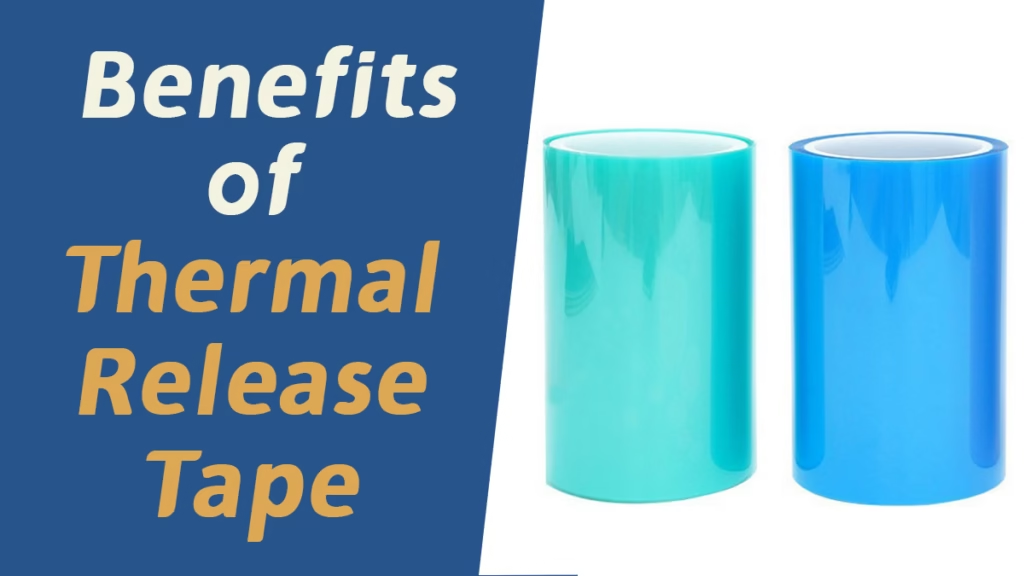
Thermal release tape is a heat-activated adhesive film engineered for temporary bonding and residue-free release in electronics and industrial manufacturing. At room temperature it behaves like a strong mounting tape; once heated to its activation temperature, the adhesive loses bond strength cleanly without solvent cleaning or mechanical scraping.
This guide covers the four primary applications where thermal release tape replaces conventional masking or fixturing methods — PCB assembly, semiconductor wafer grinding, automotive paint masking, and solar panel lamination — and the selection criteria that determine which grade fits each process.
Specifications at a Glance
- Three standard grades cover the full activation range: CT-RJ138 (100–120°C), CT-RJ114 (130–150°C), and CT-RJ160 (150°C)
- Release leaves zero adhesive residue — critical for PCB assembly, semiconductor wafer backgrinding, and display panel handling where contamination causes direct yield loss
- Four primary industrial applications: PCB and electronics assembly, semiconductor wafer handling, automotive paint masking, and solar panel lamination
- Selection depends on three factors: your process temperature window, required initial peel force, and substrate sensitivity to heat or chemicals
- Tested per IPC-TM-650 2.3.25 ion contamination and ASTM D3330 peel methodology; all materials are RoHS- and REACH-compliant
What Is Thermal Release Tape?
How Heat-Activated Release Works
The adhesive layer in thermal release tape contains thermally expandable microspheres dispersed within an acrylic or silicone base. At room temperature, the microspheres remain compact and the adhesive maintains full contact with the substrate — producing stable peel forces of 200 to 600+ g/25mm on steel.
When the tape reaches its activation temperature, the microspheres expand rapidly, converting the adhesive layer from a continuous film into a foam-like structure. Contact area between adhesive and substrate drops to near-zero, and the tape separates with minimal mechanical effort. No adhesive transfers to the substrate surface.
The expansion is irreversible. Once activated, the tape cannot recover its original peel strength — each process cycle requires fresh tape.
Backing Materials and Construction
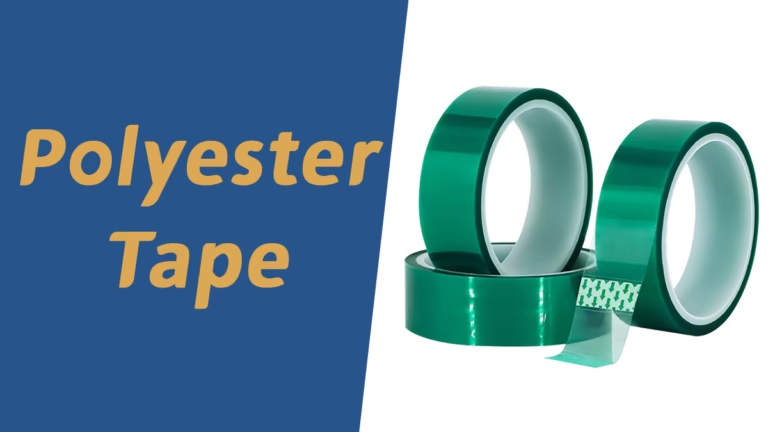
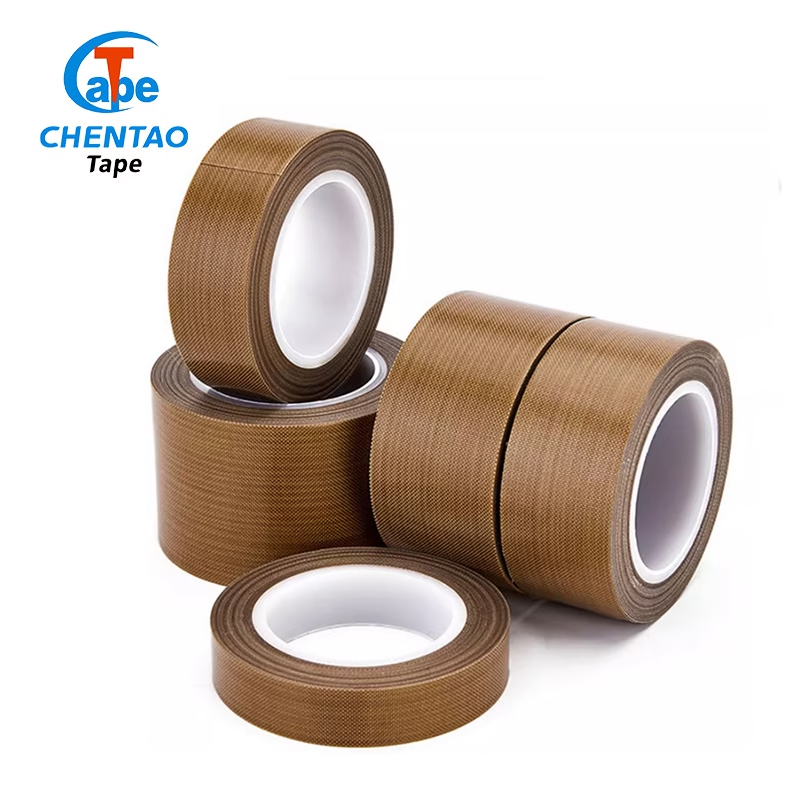
ChenTao’s thermal release tape uses polyester (PET) film as the standard substrate. PET provides dimensional stability through repeated temperature cycles and maintains structural integrity at continuous service temperatures up to 150°C. Available total thicknesses range from 80 μm (CT-RJ138) to 160 μm (CT-RJ114) depending on the adhesive system and application load requirements.
For applications requiring higher process temperatures, polyimide (PI) film backing is available on request — the same substrate used in polyimide tape for SMT masking applications, rated for continuous service beyond 200°C.
Technical Specifications at a Glance
ChenTao supplies three standard thermal release tape grades. All values from ChenTao production specification sheets; independent test verification is available on request. For peel adhesion methodology, see ASTM D3330; for general tape property standards, see ASTM D1000.
Scroll sideways to compare all columns.
| Property | CT-RJ138 | CT-RJ114 | CT-RJ160 |
|---|---|---|---|
| Activation temperature | 100–120°C | 130–150°C | 150°C |
| Release method | Oven 120°C/5 min or boiling water 100°C/5 min | Oven 130–150°C/2–3 min | Oven 150°C/5 min |
| Adhesion to steel (room temp) | 600+ g/25mm | 200+ g/25mm | 600+ g/25mm |
| Total thickness | 80±5 μm | 160±4 μm | 130±8 μm |
| Residue after release | Zero (complete loss of viscosity) | Zero | Zero |
| Compliance | IPC, RoHS, ISO 10993 | IPC, RoHS | IPC, RoHS |
For applications outside these grades — custom activation temperatures, ultra-low outgassing for vacuum chambers, or die-cut formats — see the full high-temperature adhesive tape range or contact the ChenTao technical team.
4 Industrial Applications for Thermal Release Tape
1. PCB Assembly and Electronics Manufacturing
In PCB panel processing, thermal release tape serves two functions: temporary panel-to-carrier fixation during wave soldering or conformal coating, and protection of contact areas that must remain process-free.
For temporary fixation, CT-RJ138 (100–120°C release) is the standard choice. PCB panels bond to the carrier frame at room temperature, travel through the soldering line, and release after a post-process oven step at 120°C for 5 minutes — or in a boiling water bath where oven access is limited. No solvent cleaning is needed, which reduces cycle time and eliminates chemical contamination risk.
ChenTao’s electronics-grade thermal release tape meets IPC-TM-650 2.3.25 ion contamination requirements (NaCl equivalent <1.56 μg/cm²) and carries anti-static properties to protect electrostatic-sensitive components during handling. For masking during reflow soldering at peak temperatures of 260°C, polyimide tape for SMT masking maintains masking integrity through the full reflow profile where thermal release tape is not rated.
2. Semiconductor Wafer Grinding and Handling
Wafer backgrinding reduces silicon wafer thickness from the standard 725 μm to below 200 μm — in stacked-die applications, as thin as 50 μm. The wafer must be temporarily bonded to a rigid glass or silicon carrier during grinding and debonded without mechanical or thermal damage afterward.
CT-RJ138 (100°C boiling water or 120°C oven release) suits this application. The 600+ g/25mm room-temperature adhesion provides sufficient hold against grinding forces, while the low-temperature release avoids thermal stress on IC structures. Residue-zero performance is non-negotiable at this stage: any adhesive trace on the active surface is an immediate yield failure.
ChenTao’s thermal release tape is tested for low outgassing per ISO 10993, making it suitable for vacuum processing environments. For semiconductor cleanroom applications — including ISO Class 5–7 compatibility data or outgassing certificates — contact the technical team before production placement.
3. Automotive Paint Masking and EV Battery Assembly
Automotive powder coat lines operate at 160–200°C for 20–30 minutes. CT-RJ160 (150°C oven activation) handles this range: tape applied at room temperature masks surfaces that must stay paint-free, then releases in a controlled post-bake step. Standard masking tape stripped manually from powder-coated parts leaves adhesive residue requiring solvent cleaning; thermal release tape eliminates that cleaning step entirely.
In EV battery module assembly, thermal release tape holds individual cells or modules in registration during high-temperature adhesive cure cycles. After the structural adhesive sets, a brief heat step releases the process tape without mechanical stress on cell structures. For related automotive tape requirements, see the automotive masking tape range.
4. Solar Panel Lamination Support
Solar panel EVA encapsulant lamination occurs at 140–150°C — within the activation window of CT-RJ114 (130–150°C release). Thermal release tape holds cell strings and backsheets in alignment during the lamination press cycle, then releases cleanly after EVA cures.
The primary concern in solar applications is adhesive migration: silicone-based adhesives can transfer to EVA surfaces and reduce lamination bond strength, decreasing panel efficiency over the product lifetime. ChenTao’s thermal release tape uses acrylic adhesive systems, eliminating silicone migration risk. All materials are RoHS- and REACH-compliant, consistent with solar panel certification requirements.
Thermal Release Tape vs. Standard Masking Tape
Scroll sideways to compare all columns.
| Feature | Thermal Release Tape | Standard Masking Tape | UV Dicing Tape |
|---|---|---|---|
| Release trigger | Heat (80–200°C) | Mechanical peel | UV light (365 nm) |
| Residue risk | Near-zero (at correct temp) | Medium to high | Near-zero |
| Process temperature tolerance | Up to 200°C (CT-RJ160) | Up to ~80°C | UV-stable; temperature-sensitive |
| Reusable | No (single-use) | No | No |
| Best for | High-temp manufacturing, zero-residue requirements | Light masking, general painting | Optics, UV-transparent substrates, temp-sensitive components |
UV dicing tape achieves comparable zero-residue performance through UV irradiation — the right choice when components cannot tolerate any heat. Thermal release tape is preferred where UV access is limited (enclosed fixtures, opaque assemblies) or where the process already includes an oven step, avoiding additional equipment cost.
How to Select the Right Thermal Release Tape
Step 1: Match Release Temperature to Your Process
Select a grade whose activation temperature falls within your post-process release window — not during the main process step, and at least 20°C below your process peak temperature.
Scroll sideways to compare all columns.
| Application | Process Peak Temperature | Recommended Grade |
|---|---|---|
| Semiconductor backgrinding | ≤70°C grinding temp | CT-RJ138 (100–120°C release) |
| PCB post-solder release | 100–120°C dwell | CT-RJ138 |
| Automotive primer bake | 130–150°C bake | CT-RJ114 |
| Automotive powder coat | 160–200°C bake | CT-RJ160 (150°C release) |
| Solar EVA lamination | 140–150°C press | CT-RJ114 (validate with sample) |
Request a sample for validation on your actual substrate and equipment before committing to production quantities.
Step 2: Match Adhesion Level to Substrate and Load
- 200+ g/25mm (CT-RJ114): Flat, rigid substrates with low process loads — glass panels, display subassemblies, light fixturing
- 600+ g/25mm (CT-RJ138, CT-RJ160): Substrates subject to grinding forces, vibration, or multi-axis handling — semiconductor wafers, PCB carrier frames, battery modules
For pressure-sensitive substrates (thin wafers ≤200 μm, flexible PCBs), discuss custom adhesion levels with the ChenTao technical team before production to avoid substrate damage during debonding.
Step 3: Verify Chemical Compatibility
- Electronics assemblies: Confirm ion content meets IPC-TM-650 2.3.25 (NaCl equivalent <1.56 μg/cm²) — request the contamination test report
- Semiconductor cleanroom environments: Request outgassing data (ASTM E595 or equivalent); verify ISO Class 5–7 compatibility
- Solar lamination: Confirm acrylic (non-silicone) adhesive system to avoid EVA adhesion interference
- Solvent-present processes: Verify resistance to specific process chemicals before deployment at scale
Sourcing Thermal Release Tape from ChenTao
For manufacturing engineers sourcing thermal release tape across multiple process temperatures, consolidating supply to a single ISO-certified manufacturer simplifies documentation: one material compliance declaration, one technical datasheet, one quality contact. ChenTao (cttape.com) supplies CT-RJ138, CT-RJ114, and CT-RJ160 grades from its Dongguan, China manufacturing site, with custom widths, lengths, and die-cut formats available.
ChenTao holds ISO 9001:2015, ISO 14001, and ISO 45001 certifications. In-house acrylic adhesive coating enables custom activation temperatures, film backing options, and adhesion levels for application-specific requirements. All materials are RoHS- and REACH-compliant; supplier material declarations are available on request.
Standard lead time is 15 working days. Samples dispatch within 24 hours of specification confirmation. A batch QA report accompanies every production shipment.
To request a sample or discuss specifications, visit cttape.com/contact/.
Frequently Asked Questions
What temperature does thermal release tape activate at?
ChenTao’s standard grades activate at 100–120°C (CT-RJ138 — also supports 100°C boiling water release for 5 minutes), 130–150°C (CT-RJ114), or 150°C (CT-RJ160). For applications requiring temperatures outside these ranges — ultra-low release below 100°C or precision activation above 160°C — contact the ChenTao technical team. Always validate the selected grade on your actual substrate and equipment before production: surface material, contact area, and heating uniformity all affect activation performance.
Can thermal release tape be reused after heat activation?
No. The microspheres within the adhesive expand permanently when heated to the activation temperature. The structure cannot return to its original state after cooling — peel force remains near-zero, and the tape provides no usable adhesion for a second cycle. Each process cycle requires fresh tape. Factor tape consumption into your per-unit process cost when evaluating thermal release tape against alternatives.
How does thermal release tape differ from UV dicing tape?
Both achieve near-zero residue release, but through different triggers. UV dicing tape releases under UV light (typically 365 nm) — preferred for temperature-sensitive components where any heat could damage circuits or optical coatings. Thermal release tape uses oven or heated water (80–200°C depending on grade) — preferred when UV access is physically limited, when the assembly is opaque to UV light, or when an oven step is already in the process line. UV equipment typically carries higher capital cost than oven equipment.
Does thermal release tape leave adhesive residue?
When heated uniformly to the specified activation temperature for the required dwell time, residue is near-zero. CT-RJ138, CT-RJ114, and CT-RJ160 all achieve “complete loss of viscosity” at their respective activation conditions per ChenTao specification sheets. Partial activation — insufficient temperature or uneven heating across the bonded area — can leave localized adhesive traces. Use a temperature-controlled oven or heated press rather than a heat gun to ensure uniform activation. If residue appears in production, verify that the full bonded area reached the minimum activation temperature for the required dwell time.
What substrates are not suitable for thermal release tape?
Strong solvents in the process environment may degrade the acrylic adhesive before the main process step completes — verify chemical resistance before deployment. Very rough or porous surfaces reduce initial contact area and produce inconsistent room-temperature peel force, risking part shift during processing. Components that cannot tolerate any temperature above 70°C are better candidates for UV dicing tape. Applications requiring continuous temperatures above 200°C exceed the current ChenTao product range — contact the technical team to discuss options.
Does ChenTao offer custom release temperatures outside standard grades?
Yes. For applications requiring activation temperatures outside the CT-RJ138 / CT-RJ114 / CT-RJ160 range — ultra-low release at 70°C or precision activation at 180°C — custom formulations are available. Provide your process temperature window, substrate type, required adhesion level, and any chemical compatibility requirements to the ChenTao technical team. Standard products ship in 15 working days; custom formulations require advance technical discussion to confirm feasibility and sampling timelines. Start at cttape.com/contact/.
Find the right tape for your application
Tell us what you need to bond, your operating conditions and the size or quantity you have in mind. Our team can help with material selection, samples and a quotation.
Discuss my application