Everything You Need to Know About Kapton Tape and Custom Solutions
2025-10-30 · ~3 min read
In this guide
In the demanding world of modern manufacturing—where precision, durability, and safety are non-negotiable—Kapton tape has become a go-to insulation and protection material. From aerospace to PCB assembly, its ability to withstand extreme heat and maintain dielectric stability makes it one of the most versatile high-performance tapes on the market. At CT Tape, we specialize in […]
In the demanding world of modern manufacturing—where precision, durability, and safety are non-negotiable—Kapton tape has become a go-to insulation and protection material. From aerospace to PCB assembly, its ability to withstand extreme heat and maintain dielectric stability makes it one of the most versatile high-performance tapes on the market.
At CT Tape, we specialize in industrial adhesive and insulation solutions tailored to B2B clients. Our expertise lies not just in supplying Kapton tape, but in engineering custom solutions that improve process efficiency and reliability.
CT Tape Kapton Tape used in high-temperature electronic applications
What Is Kapton Tape?
Kapton tape is a polyimide film tape made from DuPont™ Kapton® material, often coated with silicone adhesive for high-temperature resistance. It combines flexibility, electrical insulation, and chemical stability even in harsh environments.
Property
Typical Range / Description
Base Material
Polyimide (DuPont™ Kapton®)
Color
Amber / Golden
Thickness
25μm – 125μm
Temperature Range
–250 °C to +260 °C
Adhesive Type
Silicone / Acrylic / No adhesive
Dielectric Strength
≥ 6.5 kV
Certifications
UL94 V-0, RoHS, REACH compliant
Key Features and Benefits
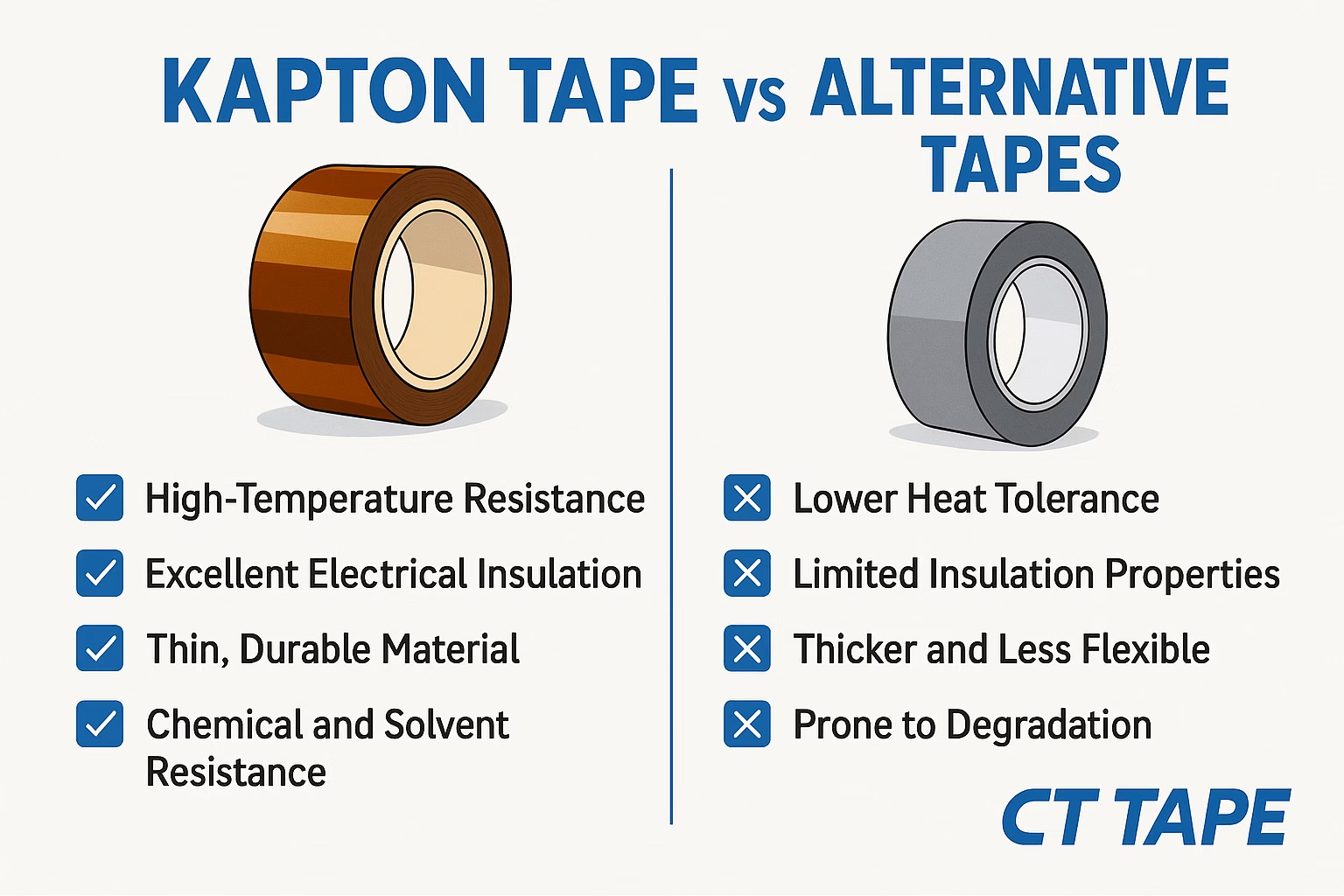
High-Temperature Resistance: Operates continuously up to 260 °C, with peaks near 400 °C.
Excellent Electrical Insulation: High dielectric strength, prevents short circuits in sensitive components.
Chemical and Solvent Resistance: Maintains integrity under oils, acids, bases, and radiation.
Thin and Flexible: Ideal for irregular shapes and precision masking.
Customizable Adhesion: Available with silicone, acrylic, or no adhesive backing.
CT Tape provides industrial adhesive and insulation materials for the electronics, automotive, and aerospace industries. With in-house coating and die-cutting, CT Tape delivers fast lead times, flexible customization, and engineering support globally.
Share this article
One-click share (text is prefilled where supported).
Contains information related to marketing campaigns of the user. These are shared with Google AdWords / Google Ads when the Google Ads and Google Analytics accounts are linked together.
90 days
__utma
ID used to identify users and sessions
2 years after last activity
__utmt
Used to monitor number of Google Analytics server requests
10 minutes
__utmb
Used to distinguish new sessions and visits. This cookie is set when the GA.js javascript library is loaded and there is no existing __utmb cookie. The cookie is updated every time data is sent to the Google Analytics server.
30 minutes after last activity
__utmc
Used only with old Urchin versions of Google Analytics and not with GA.js. Was used to distinguish between new sessions and visits at the end of a session.
End of session (browser)
__utmz
Contains information about the traffic source or campaign that directed user to the website. The cookie is set when the GA.js javascript is loaded and updated when data is sent to the Google Anaytics server
6 months after last activity
__utmv
Contains custom information set by the web developer via the _setCustomVar method in Google Analytics. This cookie is updated every time new data is sent to the Google Analytics server.
2 years after last activity
__utmx
Used to determine whether a user is included in an A / B or Multivariate test.
18 months
_ga
ID used to identify users
2 years
_gali
Used by Google Analytics to determine which links on a page are being clicked
30 seconds
_ga_
ID used to identify users
2 years
_gid
ID used to identify users for 24 hours after last activity
24 hours
_gat
Used to monitor number of Google Analytics server requests when using Google Tag Manager