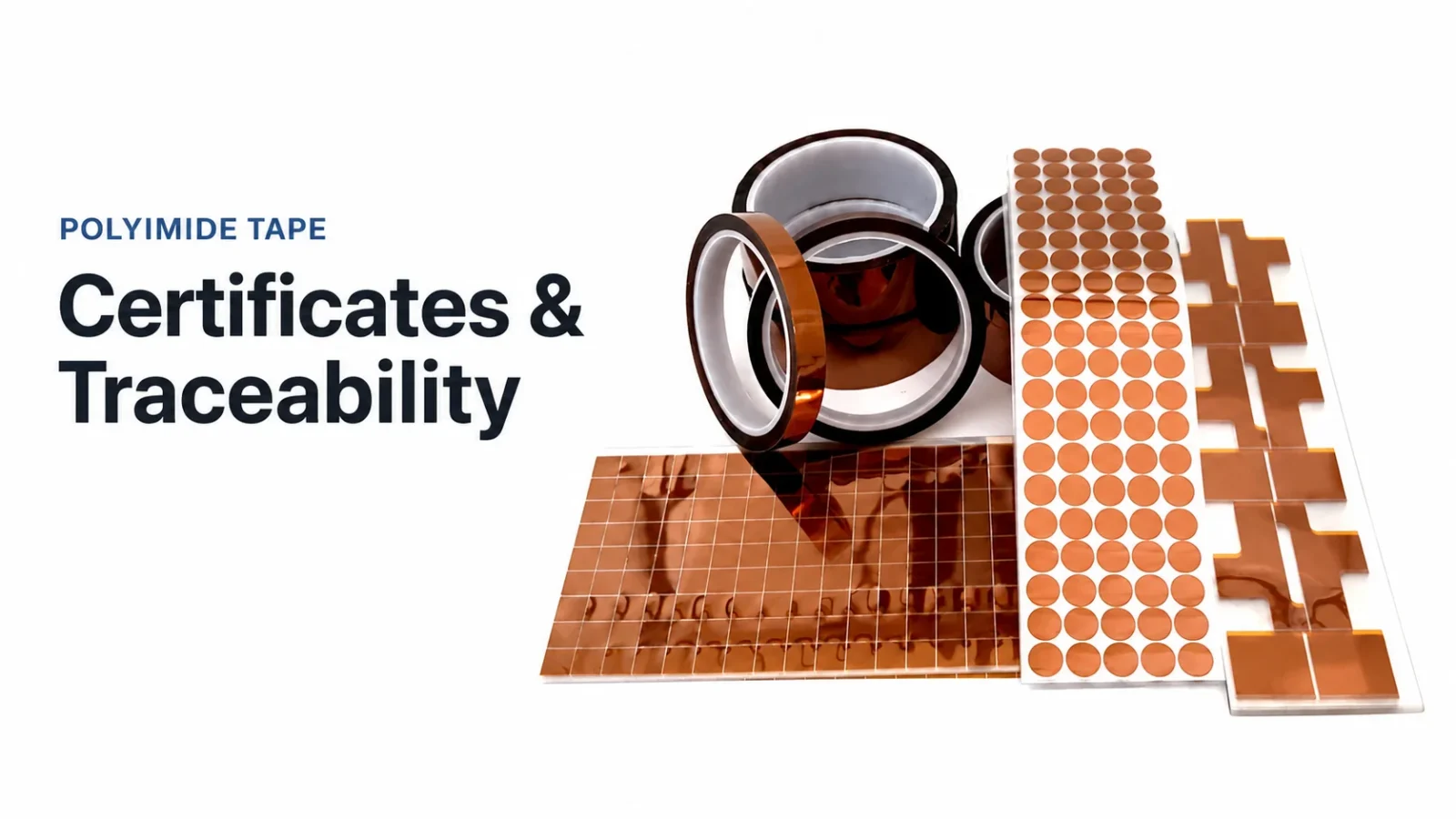
Polyimide tape

Aerospace-grade Polyimide tape: certifications and traceability — Procurement & QA guide

2025-12-15 · ~8 min read
In this guide

A practical procurement and QA guide for aerospace-grade polyimide tape certifications and traceability. Learn required standards, test reports (ASTM E595, IPC-TM-650), CoC and MTR expectations, lot serialization, and an RFQ/acceptance checklist to speed qualification and reduce supply risk.

For OEMs, maintenance teams and procurement specialists specifying aerospace-grade polyimide tape, clear requirements for aerospace-grade polyimide tape certifications and traceability are essential to reduce risk, prevent contamination and shorten qualification time. This guide defines what “aerospace-grade” means for polyimide tape, lists the standards and test reports you must request, explains lot-level traceability practices, and provides RFQ and QA pack templates you can adopt immediately.

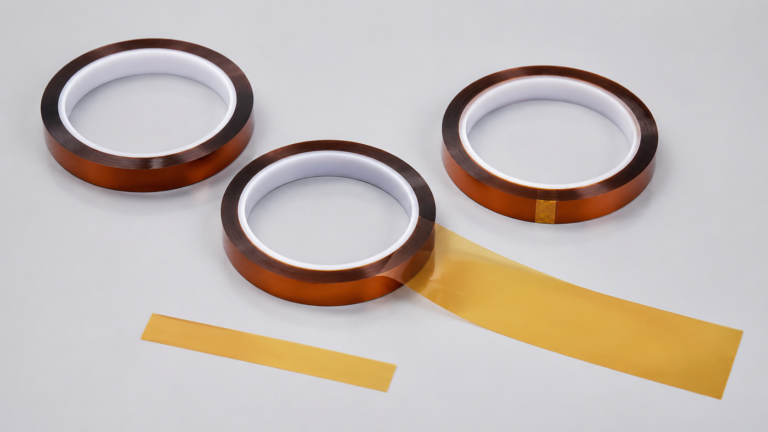
Polyimide tape rolls are placed on the warehouse pallets.

Aerospace-grade Polyimide tape: certifications and traceability

This section introduces a buyer-centric scope: what to expect when a supplier calls a product “aerospace-grade”, why formal certifications and lot traceability matter for procurement and QA, and a high-level buyer checklist you can use during vendor selection.

What buyers mean by ‘aerospace-grade’ for polyimide tape

In procurement terms, “aerospace-grade” for polyimide (PI) tape implies a combination of materials, adhesive chemistries and documented process controls that meet the environmental, cleanliness and performance demands of avionics, wire harnesses and other flight hardware. Typical practical attributes you should require in RFQs are:

  • Backing: true polyimide film (e.g., 12.5–50 µm nominal film thickness). Common commercial thicknesses are 12.5 µm, 25 µm and 50 µm.
  • Total tape thickness: finished tape typically 25–125 µm depending on adhesive coat weight and film.
  • Adhesive: high-temperature silicone or high-temp acrylic. Silicone is preferred where repeated high-temperature rework or very low outgassing is required; high-temp acrylics often deliver superior room-temperature adhesion and long-term shear.
  • Temperature rating: continuous operating temperature commonly 200–260°C; short-term peaks (reflow/soldering) may be higher but must be specified (e.g., 300°C for 60 seconds peak).
  • Low outgassing: documented TML and CVCM per ASTM E595 (typical aerospace thresholds: TML ≤ 1.0%, CVCM ≤ 0.1%).
  • Consistent physical properties: thickness, peel strength, dielectric strength and tensile properties with documented lot control.

Distinguish clearly between consumer or general-purpose PI tape (hobbyist electronics, undefined process controls and no traceability) and aerospace-grade tape: the latter must be accompanied by a documented test history, material traceability to raw polymer and adhesive lots, and supplier quality system evidence (AS9100 or ISO9001 with aerospace practices).

Executive procurement checklist (quick reference)

Use this one-page checklist in RFQs and supplier evaluations. The article expands on each item below:

  • QMS evidence: AS9100 or ISO9001 certificate; AS9120 if purchasing via distributor.
  • Certificate of Conformance (CoC) tied to finished roll lot numbers.
  • Material Test Reports (MTRs) for raw polymer and adhesive lots.
  • Independent lab test reports: ASTM E595 (TML/CVCM), IPC-TM-650 test citations, ASTM D149 dielectric tests, ASTM D3330 peel tests.
  • Lot/batch number chain-of-custody from raw materials to finished reels.
  • First Article Inspection (FAI) protocol per AS9102 and sample plan.
  • Packaging and shelf-life instructions (moisture barrier, desiccant, sealed reels with expiration).

Relevant AS / R / EN and other standards buyers must reference

Buyers should cite the exact standards and test methods they require in RFQs rather than broad references. Below are the categories and specific standards commonly applied to aerospace polyimide tape procurement.

Tape adhesion testing equipment and some of the accompanying test reports

Quality management and traceability standards (AS-series)

Key quality management standards to request or verify:

  • AS9100: aerospace QMS requirement. Expect suppliers to provide an AS9100 certificate or documented implementation of AS9100/ISO9001 with aerospace controls.
  • AS9120: relevant when buying through a distributor or reseller; it documents distributor controls for traceability and storage.
  • AS9102 (FAI): require an FAI form when qualifying a new tape part for a specific assembly; this ensures sample results map directly to production lots.

R-standard environmental and avionics suitability (RTCA/DO-series)

For avionics hardware-side acceptance, cite the applicable RTCA/DO-160 categories and clauses. DO-160 defines environmental tests (temperature, humidity, vibration, fluid susceptibility) that a tape may need to survive when applied to equipment:

  • Specify the relevant DO-160 sections in the RFQ (e.g., temperature variation, category for altitude, humidity categories and fluid susceptibility if the tape will see aircraft fluids).
  • Use DO-160 to set pass/fail conditions for assemblies using the tape — for example, define required temperature cycling and combined humidity exposure for harnesses attached to avionics boxes.

EN and other regional standards and cross-industry norms

Regional norms may be applicable when parts are cross-certified across mobility sectors:

  • Railway standards such as EN 45545-2 address flammability; these are not aerospace standards but may be requested where the same tape serves both rail and aerospace customers.
  • Prioritize aerospace-specific standards; only add EN/IEC requirements where ground-support equipment or cross-certified components require them.

Test-method standards to request (ASTM, IPC, MIL, ISO)

Specify exact test-method references in RFQs. Commonly referenced methods include:

  • IPC-TM-650 test methods for electronics materials: specify the exact TM number used for peel, ionic contamination and thermal stability results when the tape will touch PCB assemblies.
  • ASTM D1000 and ASTM D3330/D3330M variants for pressure-sensitive tape peel and adhesion tests.
  • ASTM E595 for outgassing (report TML, CVCM and collected volatile condensable materials under defined conditions).
  • ASTM D149 for dielectric breakdown testing (kV/mm) and ASTM D257 for surface/volume resistivity where electrical insulation is required.
  • MIL-STD-202 or MIL-STD-810 methods if military-level environmental testing is required — specify the clause rather than a blanket MIL reference.

For authoritative background on quality standards see iso.org and for test method references see astm.org.

Accreditations and lab competence

When requesting independent lab reports, require labs with recognized accreditations. For special processes and aerospace labs, NADCAP accreditation or ILAC-accredited labs with scope covering adhesives/films is preferred. Demand calibration certificates for test equipment used to generate reported data and include lab report numbers and signatory authority on submitted reports.

Material and performance specifications to require in RFQs

Procurement and QA must include explicit technical parameters and acceptance thresholds in RFQs and purchase orders. Below is a practical checklist and recommended numeric ranges for common aerospace-grade PI tape use-cases.

Mechanical and adhesive performance metrics

Specify the exact test method, specimen preparation and acceptance units:

  • Peel adhesion: specify ASTM D3330 or IPC-TM-650 equivalent, 90° peel after 24 h room temperature, report in N/25 mm (or oz/in) and provide values for as-supplied and after thermal aging. Typical aerospace ranges: 0.5–3.0 N/cm (5–27 oz/in) depending on adhesive chemistry and intended service.
  • Shear holding: define test load and temperature, e.g., 1000 g at 100°C for 1000 hours with no >10 mm displacement as an example requirement for harness retention.
  • Tensile and elongation (film): report tensile strength in MPa and elongation % per ISO or ASTM film test methods. Typical PI film tensile strength > 100 MPa and elongation 20–50% depending on film formulation.

Thermal, chemical and outgassing requirements

Thermal specifications must state continuous and peak exposure profiles:

  • Continuous operating temperature: commonly 200–260°C. If the application has continuous exposure to 250°C, specify 250°C as the requirement; do not leave ambiguous ranges.
  • Peak temperature exposure: e.g., 300°C for 60 seconds for reflow masking—state exact peak temp and dwell time.
  • Outgassing: request ASTM E595 reports with sample weights, test temperature (typically 125°C for 24 hours in vacuum for E595), TML and CVCM. Typical acceptance: TML ≤ 1.0%, CVCM ≤ 0.1% for contamination-sensitive avionics; for optics or spaceflight parts, require more stringent values or additional testing.
  • Chemical resistance: list process solvents the tape will encounter (isopropyl alcohol, cleaning solvents, flux residues) and request percent property retention (e.g., <20% loss of adhesion after 24 h solvent exposure at defined conditions).

Packaging, shelf life and handling specs

Specify packaging to preserve lot integrity and performance:

  • Moisture barrier packaging with desiccant and vacuum or inert gas seal when humidity or contamination is a concern.
  • Labels on each reel with finished-roll lot number, raw polymer and adhesive lot cross-reference, manufacture date and expiration date where shelf life applies (typical shelf life 12–36 months depending on adhesive chemistry).
  • Request sealed qualification samples with identical lot IDs to production supply for one-to-one verification.

Lot traceability, serialization and required documentary evidence

Complete chain-of-custody from raw polymer and adhesive batches to finished tape rolls is non-negotiable in aerospace procurement. Below is a practical traceability model and the minimum documentary evidence QA teams must require.

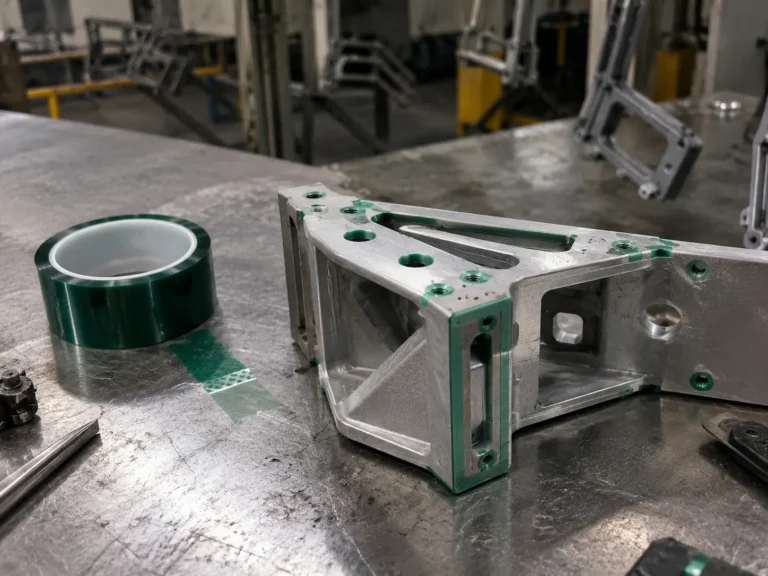
The warehouse is stocked with labeled polyimide tape.

What the minimum traceability chain should record

Record at minimum:

  1. Raw polymer lot number (supplier polymer MTR reference).
  2. Adhesive lot number (adhesive supplier MTR reference).
  3. Coating/lamination machine run identifier and timestamp (machine ID, operator and recipe/version used).
  4. Slit/rewind batch or run number with individual finished-roll serial numbers.
  5. Final inspection record linking finished-roll serials to inspection results and CoC.

Each step should be signed/initialed, dated and include measurable data (e.g., coat weight, line speed, oven setpoints) to support future investigations. For digital systems, immutable audit trails, barcodes/QR codes and database records that link to PDF MTRs are preferred.

What a Certificate of Conformance (CoC) must include

Minimum CoC fields for each finished roll or shipment:

  • Supplier name and address, part number and revision.
  • Finished-roll lot/batch number(s) and quantity.
  • Statement of conformance to the specified standards and RFQ clauses (list standards explicitly).
  • Reference numbers for associated MTRs and independent test reports (report ID and lab name).
  • Authorized signature, date and contact for supplier QA.

Require explicit linkage on the CoC to the independent lab reports (report number & laboratory name) so QA can trace test results back to the lot in question.

Material Test Reports (MTRs) and how to read them

An MTR for tape or raw materials should include:

  • Test method citation (ASTM/IPC/MIL/ISO reference) for each reported property.
  • Measured values with units and the acceptance criteria used.
  • Lot ID for the tested material and signature of the person responsible for testing.
  • Instrument calibration references and dates for critical test equipment.

Red flags when reviewing MTRs: missing lot numbers, no test method citation, absence of instrument calibration data or unsigned reports. Any of these should trigger a request for clarification or an independent lab verification.

Chain-of-custody and shipping documentation

Require packing lists that show finished-roll serials/lot IDs and sealed packaging identifiers. For distributors, request signed transfer documentation and photos of labeled reels/boxes prior to shipping. Such photos can be used for remote verification and reduce inspection time on receipt.

Material certifications and lab testing: which reports to request and acceptance thresholds

Group tests into contamination/outgassing, mechanical/adhesive, electrical, and environmental categories. Specify exact acceptance thresholds where possible to avoid ambiguity at inspection.

Outgassing and contamination testing (ASTM E595)

Request full ASTM E595 test reports. Essential report items are test temperature, vacuum conditions, sample mass before/after, TML and CVCM values, and collected condensable materials mass. Typical aerospace acceptance thresholds are:

  • TML ≤ 1.0%
  • CVCM ≤ 0.1%

For optics, infrared sensors or spaceflight hardware, demand the original test report and consider additional contamination tests (volatile condensable molecular analysis) beyond E595.

Adhesion, aging and thermal cycling tests

Require both as-supplied adhesion and adhesion after defined aging cycles:

  • Peel strength per ASTM D3330 (90°) reported at 24 h, and after thermal aging at buyer-specified conditions (e.g., 100°C for 168 h).
  • Thermal cycling acceptance: e.g., 500 cycles between -55°C and +125°C with no adhesive delamination for wire harness applications — specify the exact number of cycles and dwell times.
  • Shear holding tests at elevated temperatures (specify load and temperature) to ensure tapes will not slip under operational loads.

Require test method references (IPC-TM-650 or ASTM clauses) so results are repeatable and auditable.

Electrical and flammability tests

If the tape serves as electrical insulation, require dielectric breakdown tests per ASTM D149 and report kV/mm minimum values; a suggested starting point is >5 kV/mm unless your application demands otherwise. If using on cabin interiors or flame-critical areas, reference FAR 25.853 or other applicable flammability standards and request test reports or equivalency statements.

Supplier capability, OEM partnership, lead times and quality systems

Supplier selection should evaluate process capability, documented QMS practices and the ability to support qualification and nonconformance handling. Below are the practical evaluation points and an example timeline for sample and FAI activities.

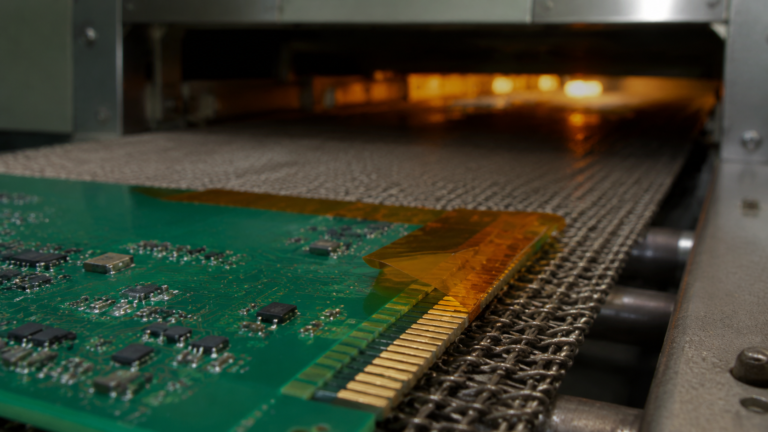
The cutting and rewinding line is currently processing polyimide tape.

Audit and qualification checklist for suppliers

Items to review during on-site or desktop audits include:

  • Process flow diagrams for film coating/lamination, slitting/rewind and packing.
  • Lot serialization and batch control practices, including how raw material lots map to finished rolls.
  • Calibration records for critical test equipment and evidence of lab competence.
  • Subcontractor test labs and their accreditations (NADCAP, ILAC).
  • Change-control process for formulations and production recipes, and documented corrective action history for past nonconformances.
  • Evidence of historical aerospace work and customer references where possible.

Sample programs, first article inspection and qualification timelines

Recommended sample program and typical timeline:

  1. RFQ and supplier QA pack request — include mandatory standards and test requirements (0–2 weeks).
  2. Initial sample pack delivery (3–6 rolls) with full CoC and linked MTRs — typically 2–4 weeks depending on supplier stock and slit widths.
  3. Independent lab testing of one roll (outgassing, peel, dielectric) — 2–3 weeks.
  4. FAI per AS9102 linking sample observations to production lot — 1–2 weeks after lab results.

Total typical qualification time: 4–12 weeks depending on test scope and lab availability. Ask suppliers for a lead-time matrix distinguishing stocked items vs custom widths and certified lots.

Pricing, MOQ and after-sales support

Cost drivers include raw film brand (e.g., DuPont Kapton vs generic PI), adhesive chemistry (silicone adhesives are more costly), custom slit widths, and certification/testing costs. Qualification testing and independent lab verification add to one-time costs; include these in your total cost of ownership calculation and amortize across expected annual usage.

Expect suppliers to provide after-sales support: batch traceability on request, rapid replacement for documented NCMRs, engineering support for application trials and clear corrective action timelines.

Cost factors, total cost of ownership and alternatives to consider

Procurement must weigh unit price against qualification risk and lifecycle costs. Below are direct and indirect cost drivers and validated alternatives for lower-spec applications.

Example cost model and qualification amortization

Simple example: independent lab tests and FAI cost $5,000 as a one-time qualification. If annual usage is 5,000 rolls, qualification adds $1.00 per roll. For low annual usage (e.g., 200 rolls), qualification adds $25 per roll. Include qualification amortization in RFQ evaluation and consider multi-year contracts to reduce per-unit cost.

When a lower-cost alternative is acceptable

Validated alternatives and boundaries:

  • Polyester (PET) tape: suitable for continuous exposure <150°C and non-contamination-critical applications; lower outgassing performance and lower maximum temperature than PI.
  • PTFE (Teflon) tape: excellent non-stick properties for masking in soldering operations but lower dielectric strength vs PI and higher cost in thin films.
  • Silicone-coated glass cloth: used for high-temperature insulation where mechanical robustness is required but with higher bulk thickness and weight.

Evaluate alternatives only after mapping operating temperature, contamination sensitivity and electrical insulation requirements to the substitute’s capabilities.

Procurement checklist and recommended documentation pack for QA and purchasing

Below is a ready-to-use procurement documentation list, RFQ field set and sample request template that purchasing and QA teams can adopt immediately.

Recommended RFQ template fields (practical form)

Copy/paste these mandatory RFQ entries into your RFQ form:

  • Part number and revision, drawing attachment and any critical dimensions or slit tolerances.
  • Required QMS evidence: supply AS9100 certificate copy; if via distributor, AS9120 certificate.
  • Mandatory test methods & pass/fail criteria: list ASTM/IPC/DO-160 clauses and numeric acceptance values (e.g., TML ≤ 1.0%, CVCM ≤ 0.1%, peel 0.5–3.0 N/cm, dielectric >5 kV/mm).
  • Sample quantity and delivery date; sample pack must include CoC and MTR linkage to finished-roll lot IDs.
  • Packaging & labeling requirements: moisture barrier, desiccant, labeled reels with lot and expiration date.
  • Retention period for documents (e.g., 7–10 years) and requirement for digital access to traceability records.

QA pack to require with first production lot

Require the following with the first production shipment:

  • Signed CoC referencing finished-roll lot IDs.
  • MTRs for raw polymer and adhesive with lot linkage.
  • Independent test reports (ASTM E595, IPC-TM-650 or ASTM D3330/D149 as applicable).
  • AS9102 FAI forms for the qualified part linking sample results to production lot.
  • Photos of labeled reels, slitting certificate showing widths/tolerances and a signed acceptance summary from supplier QA.

Sample request checklist and evaluation plan

Step-by-step sample evaluation to use when samples arrive:

  1. Receipt verification: confirm lot IDs on sample reels match those stated in CoC and packing list.
  2. Visual inspection: color, surface uniformity, edge quality after slitting.
  3. Lab tests to run: ASTM E595 (outgassing), peel (ASTM D3330), dielectric (ASTM D149) and any process-specific solvent exposure tests.
  4. In-process application trials: masking, harness routing or PCB processing to validate adhesive behavior in your operations.
  5. Final decision: accept only if documentation is complete, test values meet acceptance criteria and application trials show no adverse effects. Use ANSI/ASQ Z1.4 for sampling plans during production acceptance.

Use the QA go/no-go matrix: reject on missing documentation, missing lot traceability, failed critical tests (outgassing, dielectric for insulation applications) or unacceptable process behavior in application trials.

To accelerate supplier qualification and reduce procurement risk, request a supplier capability pack (AS9100 evidence, process flow, sample kit and traceability examples) and schedule a document review or sample kit delivery. For expedited support, ask suppliers to include one independent lab test report with initial samples.

Next steps and call to action: If you are specifying aerospace-grade polyimide tape for avionics, wire harnesses or PCB masking, request a supplier capability pack and a sample kit that includes CoC and MTR linkage today. Contact potential suppliers to schedule a document review and negotiate qualification timelines and amortized qualification costs. For technical consultation, sample testing coordination or to request a quote, include your required standards and acceptance criteria in the RFQ and ask suppliers to return the documentation pack described above.

For additional reading on application notes and case studies, see our resources, typical industry applications and related technical discussions.

Share this article
One-click share (text is prefilled where supported).

Need a tape solution for your project?

Share your application, drawings and target price. Our engineering team will recommend suitable tape structures and send you a quote within 24 hours.

Get a Custom Tape Recommendation