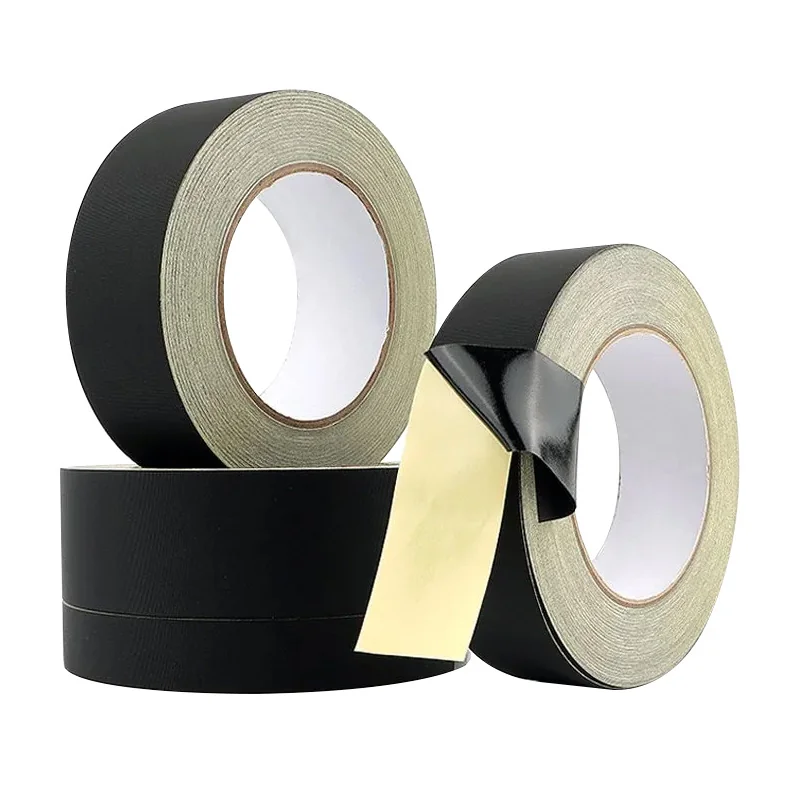
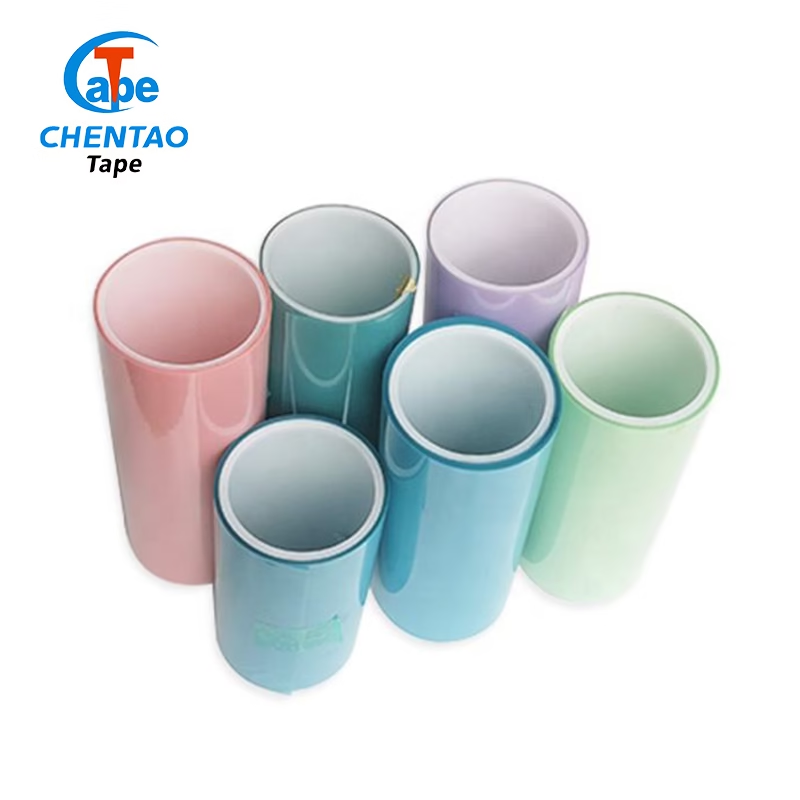
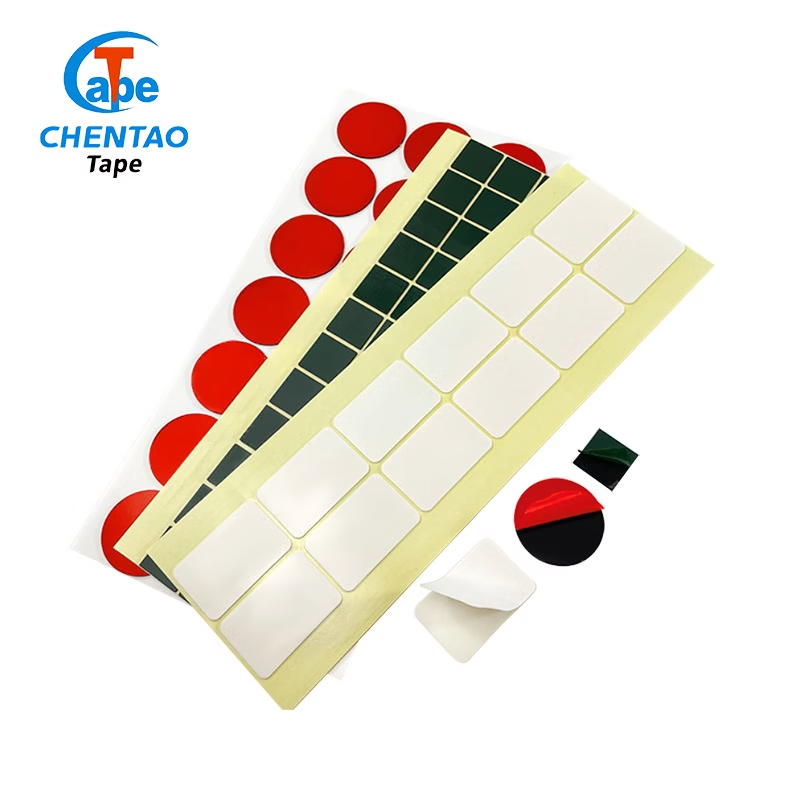
Why CT Tape: Customizable widths & die-cuts · Fast response & short lead time · Engineer-to-engineer service · Flexible MOQ · ISO 9001 · RoHS & REACH compliant
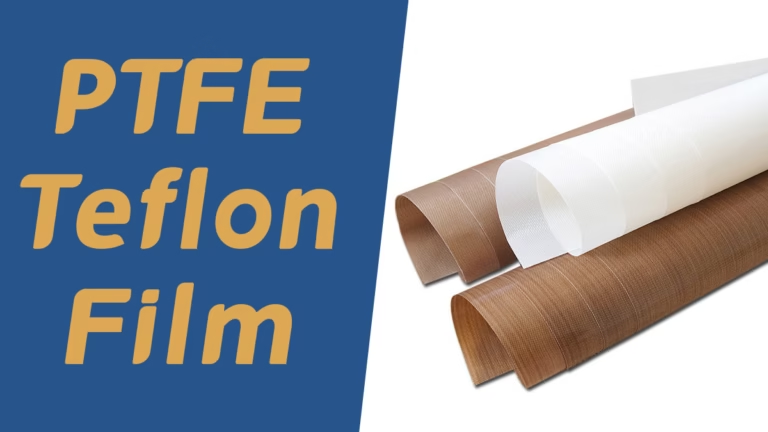
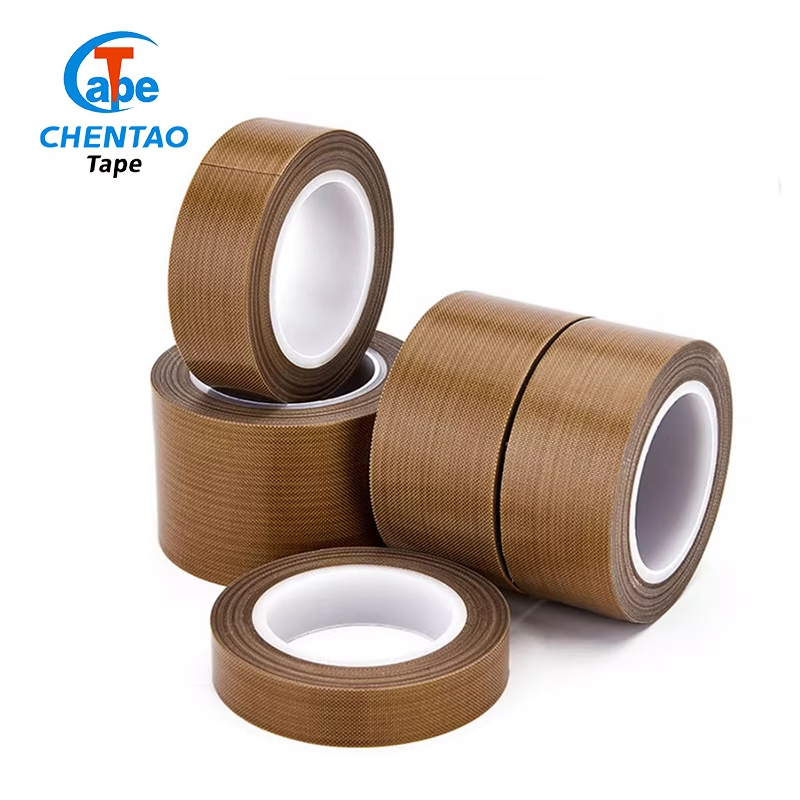
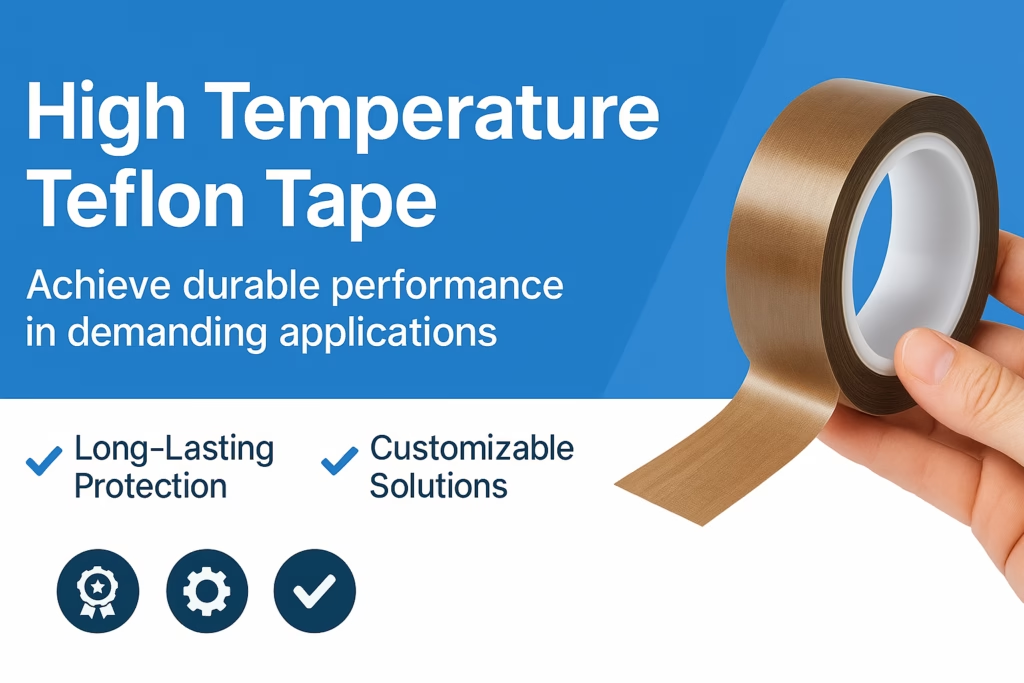
High Temperature Teflon tape—more precisely PTFE adhesive tape—provides a non-stick, chemically inert, low-friction surface that stands up to elevated temperatures. From chemical processing lines and heat-sealing equipment to laminating machines, PTFE tapes protect surfaces, improve release, and maintain dimensional stability.
This guide explains what PTFE/Teflon tape is, how it is built, where it excels, how it compares with Kapton® (polyimide) and fiberglass tapes, and how to choose/spec a solution. You’ll also see a real-world chemical plant case study and an implementation checklist you can reuse.
What Is High Temperature Teflon (PTFE) Tape?
“Teflon” is a DuPont™ brand for fluoropolymers; industrial tapes typically use PTFE (polytetrafluoroethylene). PTFE’s carbon-fluorine backbone yields extreme chemical inertia, very low surface energy (non-stick), and low friction. Most industrial PTFE tapes are PTFE-coated fiberglass cloth for strength and dimensional stability, laminated with a high-temperature silicone adhesive. Some variants use acrylic adhesive (clean removal) or PTFE film (no fabric) for ultra-smooth release.

Typical Stack-Up & Design Options
Scroll sideways to compare all columns.
| Layer | Function | Notes |
|---|---|---|
| PTFE coating or film | Non-stick release, chemical inertia, low friction | Film or PTFE-impregnated fiberglass |
| Fiberglass cloth | Tensile strength, dimensional stability | Light / standard / heavy grades |
| Adhesive (silicone / acrylic) | Bond under heat cycles | Silicone for high-temp; acrylic for clean removal |
| Release liner (optional) | Die-cutting, handling | Paper or PET liner for precision parts |
Key Properties (Typical)
- Temperature range: –70 °C to 260 °C (short peaks higher per grade)
- Coefficient of friction: very low (PTFE surface)
- Chemical resistance: inert to many acids, bases, and solvents
- Dielectric behavior: stable insulation (verify by thickness and use case)
- Configurable: cloth grade, PTFE skin smoothness, adhesive system, liner/die-cut
Technical Specifications and Material Composition
CT Tape supplies configurable PTFE constructions. Typical spec windows below (custom on request):
Scroll sideways to compare all columns.
| Parameter | Typical Range | Notes |
|---|---|---|
| Total thickness | 0.08–0.30 mm | Thinner for smooth release; thicker for wear strips |
| Adhesive type | High-temp silicone / specialty acrylic | Silicone for heat endurance; acrylic for low residue |
| Operating temp | –70 °C to 260 °C | Peaks depend on dwell & load |
| Carrier | Fiberglass cloth (light/standard/heavy) | Film-only PTFE available |
| Standard widths | 6–1000 mm | Slit-to-width; tight tolerance die-cuts |
| Color | Brown / tan (white optional) | Visual cue of grade |
| Compliance | RoHS, REACH; ISO 9001 process | Food contact on request (confirm lot docs) |
Tip: Heat-seal jaws benefit from smoother PTFE skins (cleaner release and seal quality). Wear strips/slideways benefit from heavier fiberglass grades.
Manufacturing Process & CT Tape Quality Control SOP
Our SOP prioritizes consistent release, bond, and thickness control for faster ramp-ups.

- PTFE Coating / Lamination: PTFE film/dispersion applied to fiberglass; inline thickness control.
- Thermal Curing: Promotes bond and dimensional stability.
- Adhesive Coating: Silicone or acrylic; optional linered builds.
- Slitting & Rewinding: Tight edges; traceability per roll.
- Die-Cutting / Kiss-Cut: Precision pads for hotspots; less waste.
- QC & Packaging: Thickness, peel, dimension, visual checks; COA on request.
Why it matters: Stable PTFE and adhesive laydown reduces hotspots, wrinkling, and early edge wear—extending intervals between changeovers.
Teflon (PTFE) vs. Kapton® vs. Fiberglass Tape
Each high-temperature tape solves a different class of problems:

Scroll sideways to compare all columns.
| Feature | Teflon (PTFE) Tape | Kapton® (Polyimide) Tape | Fiberglass (Silicone) Tape |
|---|---|---|---|
| Primary benefit | Non-stick release, low friction | High-temp dielectric insulation | Mechanical robustness under heat |
| Typical structure | PTFE + fiberglass + silicone adhesive | Polyimide film + silicone/acrylic adhesive | Glass cloth + silicone adhesive |
| Operating temp | ~ –70 to 260 °C | ~ –200 to 260 °C | ~ –50 to 260 °C |
| Dielectric performance | Good (thickness-dependent) | Excellent | Moderate |
| Chemical resistance | Excellent (inert) | Excellent | Good |
| Surface behavior | Anti-stick, low surface energy | Neutral | Textured, higher friction |
| Typical uses | Heat-seal jaws, release pads, wear strips | PCB masking, aerospace insulation | Thermal wraps, bundling near heat |
Rule of thumb: Need release and anti-stick? Choose PTFE. Need electrical insulation at heat? Choose Kapton. Need a rugged cloth under heat? Choose fiberglass/silicone.
Application Fields & Use Cases
- Chemical processing: Anti-stick wraps on rollers, chutes, and hoppers; protection on contact surfaces in corrosive atmospheres.
- Packaging & sealing: Heat-seal jaws and impulse sealers; fewer seal defects, less cleanup.
- Laminating & textiles: Release surfaces on hot nip rolls; low-friction slideways and wear strips.
- Electronics manufacturing: Temporary non-stick masking for hot processes; glide pads for tooling.
- Food processing (selected grades): Non-stick release on contact surfaces — verify regulatory per SKU/lot.
Case Study: Cutting Downtime by 38% at a Chemical Plant

Background: A U.S. chemical plant struggled with sticking on a heated transfer surface used to move semi-cured sheets. Operators frequently stopped lines to clean residue; edge fraying of a generic tape caused additional defects.
CT Tape approach:
- Upgraded to a heavier fiberglass PTFE tape (edge durability)
- Specified a smoother PTFE skin for better release of semi-cured sheets
- Shifted to high-temp silicone adhesive with better creep resistance
- Provided die-cut pads for hotspots, reducing waste on roll changes
Results (first 8 weeks):
- –38% downtime related to cleaning/sticking events
- –27% defects linked to edge fraying and residue transfer
- +15% line speed enabled during stable runs
Takeaway: Matching fiberglass grade + PTFE skin and adhesive to the thermal/mechanical load yields measurable OEE gains.
How to Choose the Right High Temperature Teflon Tape
Scroll sideways to compare all columns.
| Selection Criterion | Recommended Direction | Why |
|---|---|---|
| Thermal load & dwell | Heavier fiberglass grade + silicone adhesive | Better stability under prolonged heat |
| Release quality | Smoother PTFE skin | Cleaner release; fewer marks |
| Residue sensitivity | Acrylic adhesive (within temp rating) | Cleaner removal |
| Precision areas | Linered, die-cut pads | Faster changeovers, less scrap |
| Abrasion | Thicker total or tougher cloth | Longer wear life |
| Regulatory | Confirm RoHS/REACH; food-contact SKUs | Audit-ready documentation |
Pro tip: Share your process temperature profile, surface finish, and target changeover intervals. CT Tape engineers will propose a construction and sample parts with a short lead time.
FAQs & Common Pitfalls
1. Is “Teflon tape” the same as PTFE thread seal tape for plumbing?
Not exactly. Industrial high-temperature PTFE adhesive tape is a reinforced release/wear surface for heat and process equipment, while thread seal tape is a thin, non-adhesive PTFE film used to seal threaded pipe joints.
2. How hot can PTFE tape run?
Typical operating windows are about –70 °C to 260 °C, with short peaks depending on construction and load. Share your thermal profile with us for a tailored recommendation.
3. Silicone vs acrylic adhesive — which should I pick?
Choose silicone for high-temperature endurance and creep resistance. Choose acrylic where ultra-clean removal matters and temperatures are within acrylic’s rating.
4. Do you provide die-cut parts and small MOQs?
Yes. CT Tape offers slit-to-width rolls, kiss-cut pads on liners, and custom die-cuts with flexible MOQs and fast sampling.
Common Pitfalls & Tips
- Under-spec’ing fiberglass grade: Leads to edge fray/stretch. Match cloth weight to load and line speed.
- Wrong adhesive for environment: Acrylic at high heat may creep; silicone in low-temp clean removal may leave more residue than desired.
- Ignoring surface finish: Rough contact surfaces can chew edges; consider linered die-cuts for hotspots.
- No documentation: Always capture COA, compliance docs (RoHS/REACH), and basic test results for audits.
References & External Resources
About CT Tape
CT Tape supplies industrial tapes and adhesive/release solutions for packaging, chemical processing, electronics, and general manufacturing. We provide custom widths & die-cuts, fast response, engineer-to-engineer support, and flexible MOQs. ISO 9001 processes; RoHS & REACH compliant.